
Area guide · Waimea
Waimea (Kamuela): Cool Pastures, Paniolo Country, and Life Below Mauna Kea
 By Carol Porter, Realtor® · September 25, 2026
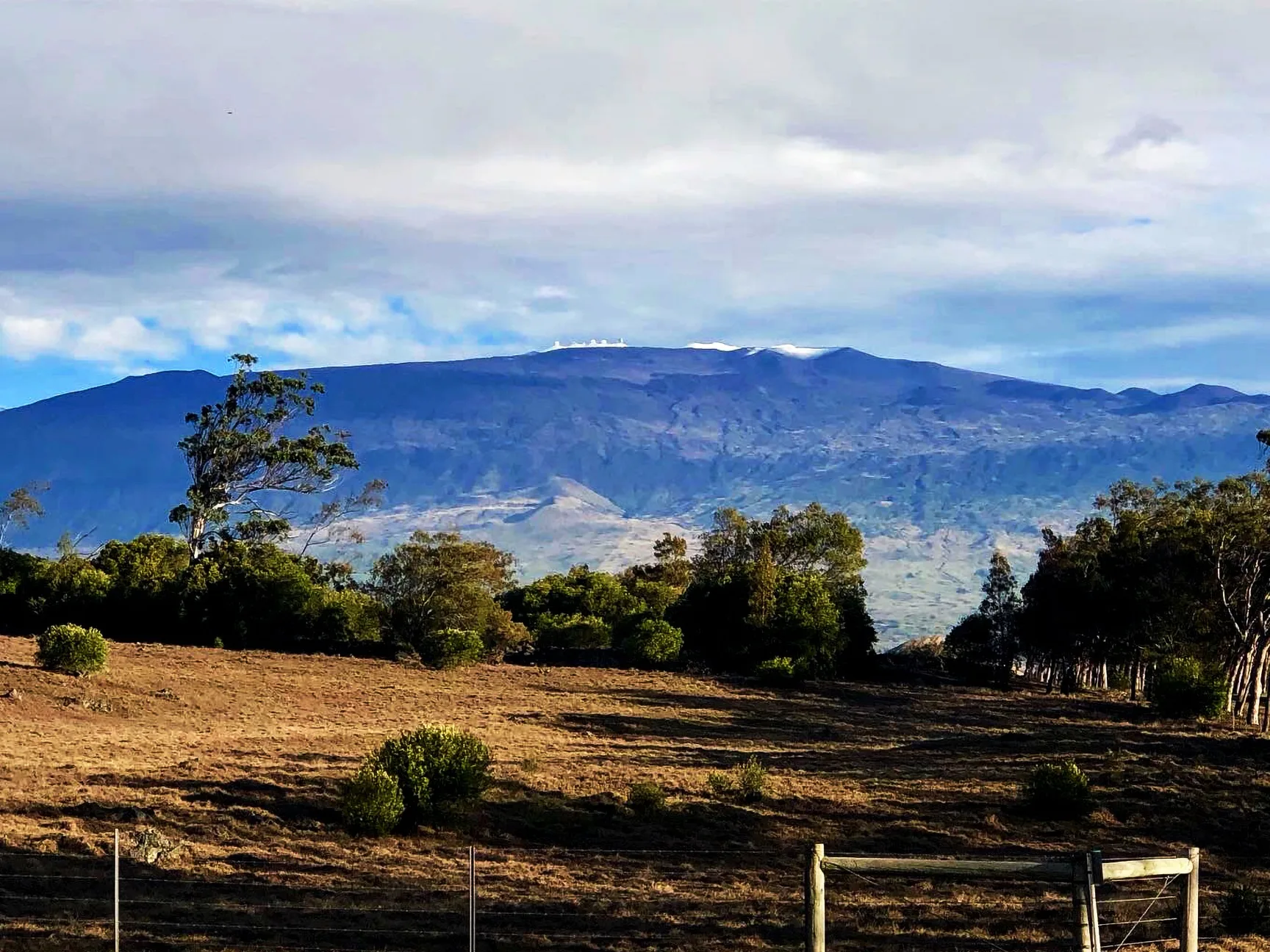
Waimea surprises people.
At roughly 2,500 feet above sea level, it is cool, green and pastoral, a landscape of rolling grasslands, cattle, horses and old ranch roads lying between the Kohala Mountains and Mauna Kea. It is the heart of Hawaiʻi Island’s paniolo country, but it is also home to astronomers and engineers, doctors and teachers, attorneys and financial professionals, farmers and resort workers. It has respected private schools, a regional hospital, a performing arts center, international astronomy facilities, farmers markets and working ranches.
There are geological reasons Waimea looks and feels so different from much of Hawaiʻi Island. There are historical reasons it became cattle country. And there are remarkable people—from the paniolo who made Hawaiian ranching famous to Richard Smart, the last private owner of Parker Ranch—who helped shape the sophisticated little town that grew up among those pastures.
A Town Between Two Volcanoes
Waimea occupies an unusual geological setting even by Hawaiʻi standards. Rather than lying on the continuous flank of a single shield volcano, the town spreads across the broad Waimea Plateau between much older Kohala and younger Mauna Kea.
The State of Hawaiʻi describes the plateau as a large, flat region formed when lava flowing from Mauna Kea slowed as it encountered the older Kohala volcano. The result is more than the narrow saddle one might imagine between two mountains. It is an expansive upland plain, much of it gently rolling pasture and agricultural land, with Kohala rising to the north and Mauna Kea dominating the view to the south.
Over time, volcanic ash contributed to some remarkably productive soils. The University of Hawaiʻi describes the Waimea soil series as a fertile sandy loam developed from volcanic ash under moderate rainfall. Agricultural researchers classify Waimea soils among the volcanic-ash soils particularly well suited to vegetable production. At UH’s Lālāmilo Research Station in Waimea, experimental crops have included vegetables, tea and blueberries.
That helps explain another side of Waimea. This isn’t just cattle country. Farms around Waimea produce an impressive variety of vegetables and other crops, and local food and farmers markets are part of everyday life. The geography also helps create Waimea’s extraordinary range of microclimates.
The Wet Side, the Dry Side—and “Fifteen Minutes From Hawaiʻi”
There really isn’t one Waimea climate.
At this elevation, Waimea is substantially cooler than the Kohala Coast below. Mornings can arrive under low clouds, evenings can be chilly enough for a fire, and a house here may require you to think more seriously about heating and dampness than air conditioning.
But conditions change noticeably as you move across town. The eastern and northern portions toward the Kohala slopes and Hāmākua side are generally greener, wetter and mistier. Head west toward Kawaihae and the landscape becomes progressively drier and sunnier. The transition can happen over a surprisingly short distance.
A good friend of mine who lived on the wet side of Waimea used to joke: “Do you know what I love about Waimea? It’s fifteen minutes from Hawaiʻi.”
Anyone who has left Waimea on a cold, misty morning and driven down Kawaihae Road understands the joke. In a remarkably short distance, the clouds can disappear, the temperature rises, green pasture gives way to dry country and suddenly you are looking at blue Pacific water and the sunny Kohala Coast most visitors imagine when they think of Hawaiʻi.
For someone considering a home here, these microclimates aren’t trivia. Sunshine, wind, rainfall, vegetation, drainage, outdoor living and home maintenance can be noticeably different depending on where you are. Someone who loves misty mornings, lush gardens and evenings by a fire may make a very different choice from someone who wants Waimea’s elevation but as much sunshine as possible.
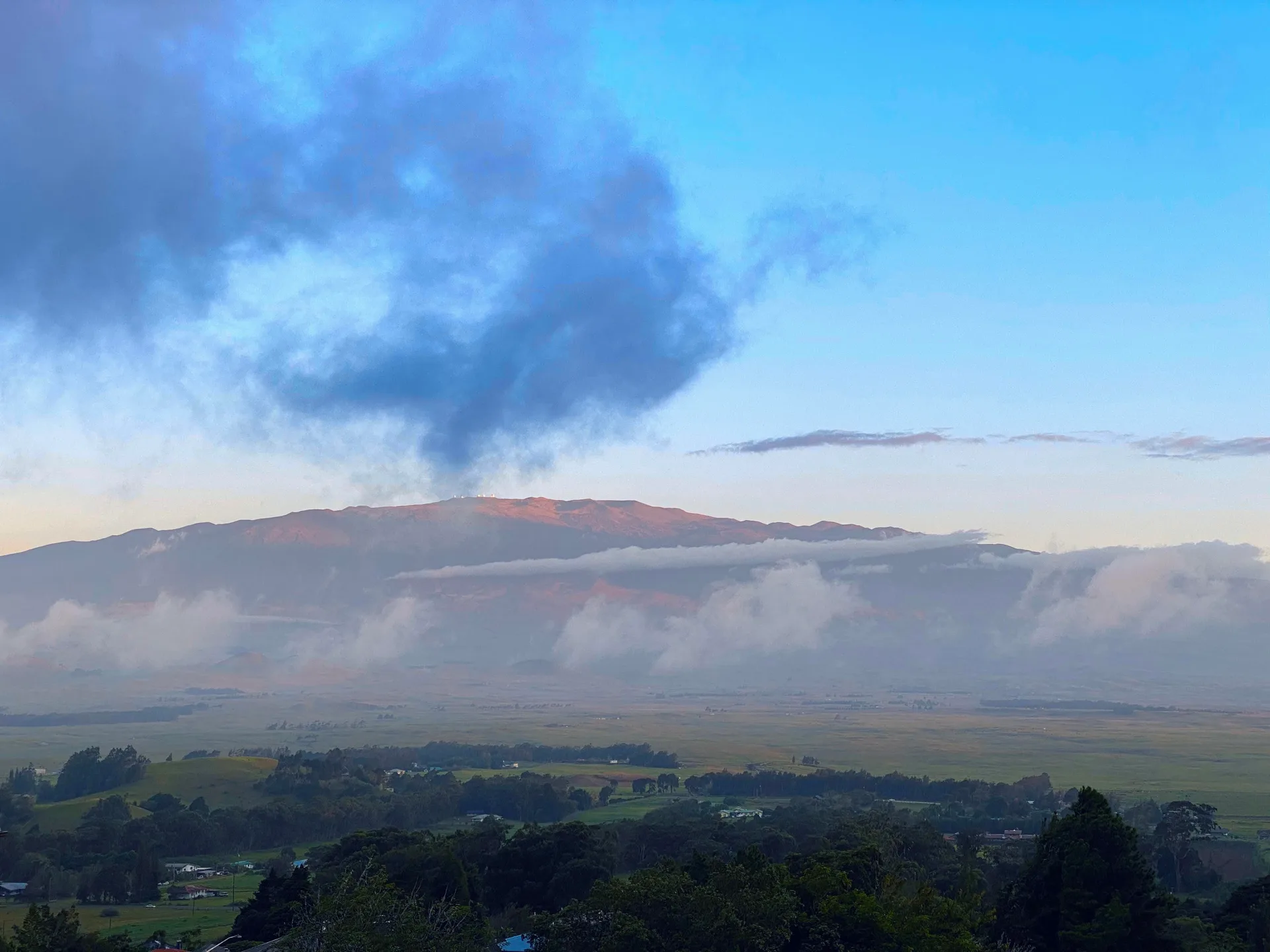
And then there is Mauna Kea. On a clear day, the mountain dominates the southern horizon, with the summit observatories visible from many parts of Waimea. When winter storms bring snow to the summit, green pasture, grazing cattle and a snow-covered Hawaiian mountain can occupy the same view.
How Waimea Became Paniolo Country
You can’t really understand Waimea without understanding cattle.
Cattle first arrived in Hawaiʻi as gifts from British Captain George Vancouver to King Kamehameha I in the late eighteenth century. Protected for a time from being killed, they multiplied and eventually became difficult to control. In the 1830s, Kamehameha III brought experienced Spanish-Mexican vaqueros to Hawaiʻi to teach Hawaiians how to manage cattle from horseback.
Hawaiian riders became extraordinarily skilled horsemen and ropers. The culture that developed became known as paniolo culture, a distinctly Hawaiian ranching tradition influenced by the vaqueros but transformed here.
John Palmer Parker became involved in hunting and managing Hawaiʻi’s wild cattle and established the nucleus of Parker Ranch in 1847. Over generations the ranch grew into one of the largest and most historically significant cattle ranches in the United States, and its lands came to surround and define much of Waimea.
One Waimea paniolo in particular would eventually prove just how accomplished Hawaiʻi’s horsemen had become. Ikua Purdy was born in Waimea in 1873 and learned to ride and rope at Parker Ranch. In 1908, Purdy traveled with fellow Hawaiʻi Island paniolo Archie Kaʻaua and Jack Low to compete at Frontier Days in Cheyenne, Wyoming, against some of the leading ropers of the American West.
They did not go merely to put on an exhibition. Purdy won the steer-roping championship, roping his steer in 56 seconds. Kaʻaua and Low also distinguished themselves in the competition, and the performance of the Hawaiians caused a sensation. At a time when the American cowboy was already becoming a national icon, three paniolo from islands thousands of miles out in the Pacific demonstrated that Hawaiʻi had developed a formidable ranching tradition of its own.
Purdy’s victory made him a legend in Hawaiʻi and an important figure in American rodeo history. In 1999, he became the first Hawaiian inducted into the National Rodeo Hall of Fame at the National Cowboy & Western Heritage Museum.
That achievement is worth remembering when talking about paniolo history because Hawaiian cattle culture wasn’t an imitation of the American West. Hawaiians had been working cattle from horseback for generations by the time Purdy arrived in Wyoming. What began with lessons from Mexican vaqueros had developed into its own culture, equipment, horsemanship, music and traditions.
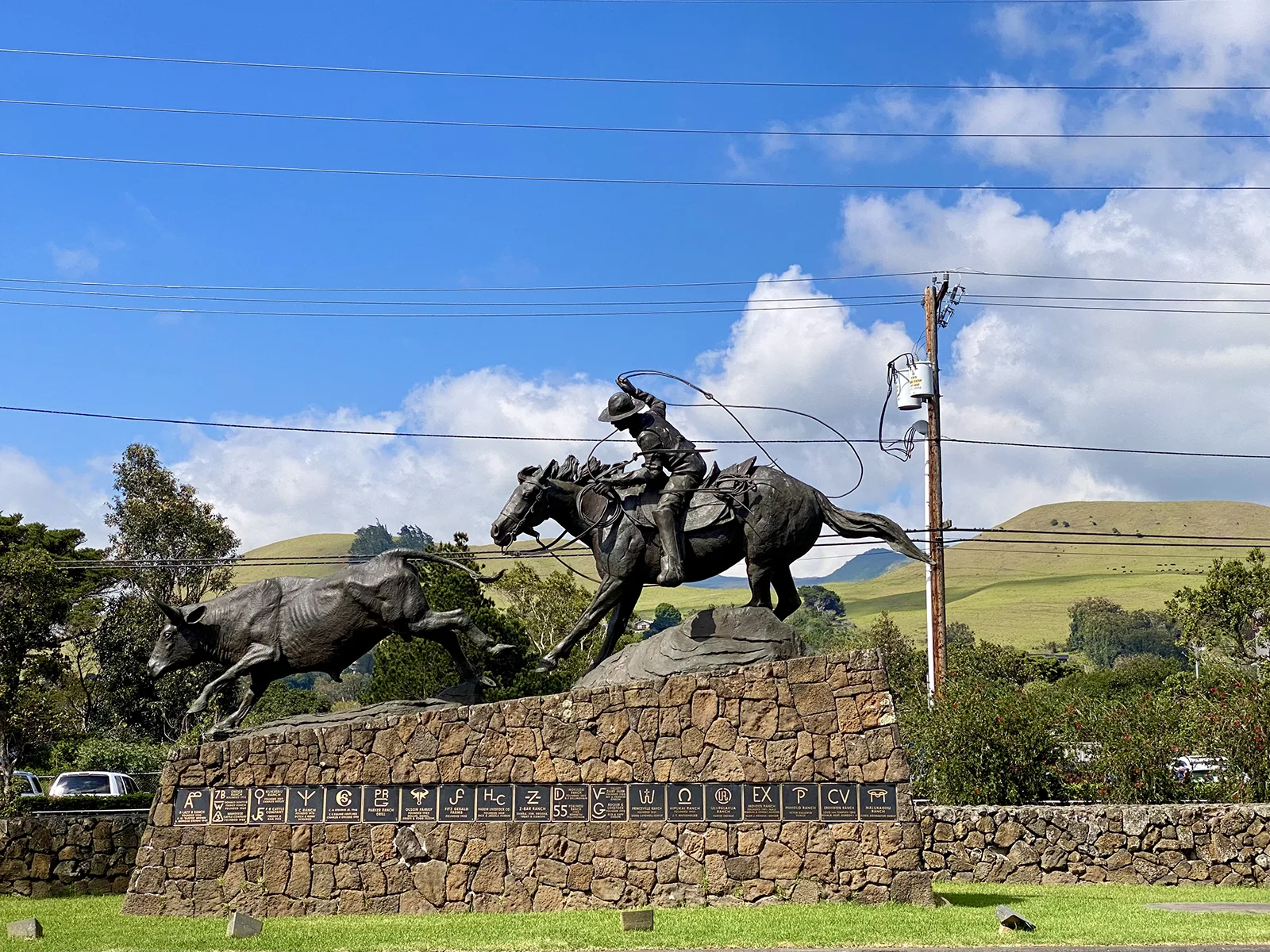
Purdy remains very much a Waimea figure. His story began here, on Parker Ranch, and today a larger-than-life bronze statue of him roping a steer stands in Waimea. His image is a reminder that the paniolo tradition celebrated here produced horsemen who could compete with—and defeat—the best ropers in the American West.
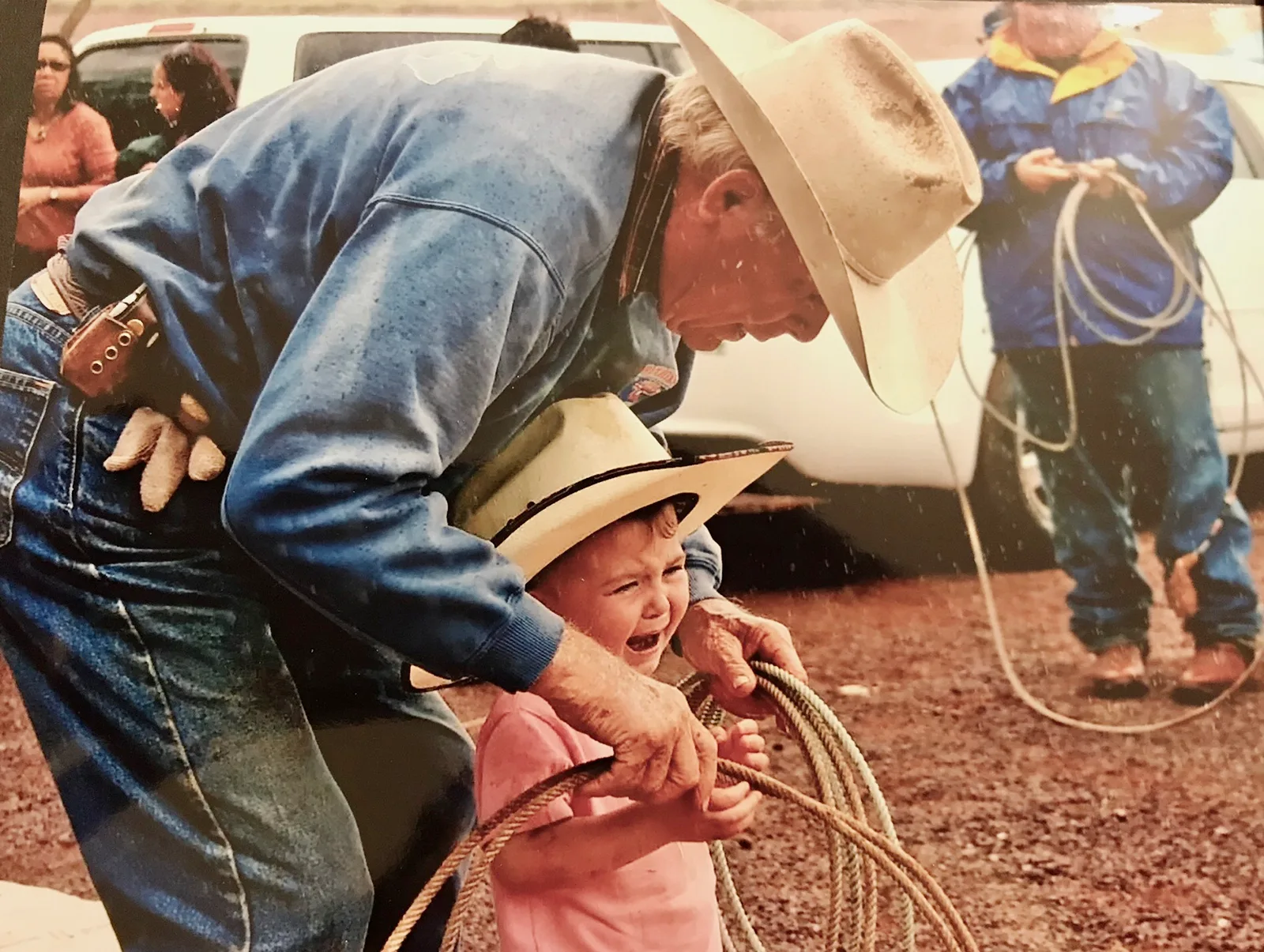
And paniolo culture isn’t simply history here. When I first came to Waimea, some stores and public spaces still had hitching posts for horses. They’re gone now, but I remember them because they said something about the town without needing explanation: Waimea’s ranching culture wasn’t a historical theme. It was part of ordinary life.
Waimea has changed considerably since then. There are more houses, more businesses and certainly more traffic, and the old hitching posts have disappeared. But horses, cattle, rodeo and working ranches remain part of the community. Drive only a short distance from the center of town and you can still find yourself looking across miles of pasture.
When Waimea Became Camp Tarawa
World War II brought an extraordinary interruption to life in what was then a very small ranching community. Parker Ranch made an enormous amount of its land available to the U.S. military, and Richard Smart offered his home, Puʻuʻopelu, for use as Marine divisional headquarters. Camp Tarawa, established on Parker Ranch land in and around Waimea, became one of the major Marine training centers in the Pacific.
The 2nd Marine Division arrived in December 1943 after the brutal Battle of Tarawa. The Marines named their new home Camp Tarawa in memory of the battle they had just survived. Here they recuperated, received replacements and trained for the coming campaigns at Saipan and Tinian. They were followed by the 5th Marine Division, which trained in Waimea for the assault on Iwo Jima.
The surrounding landscape became part of that preparation. Marines climbed Buster Brown Hill and Puʻu Ulaʻula repeatedly to prepare for the steep volcanic terrain they would encounter at Mount Suribachi. Down on the Kohala Coast, Hāpuna Bay became an amphibious training area, where Marines practiced landing troops and equipment from the sea. An action report from the 5th Marine Division records an amphibious landing exercise there in November 1944 as preparations for Iwo Jima were underway.
The military presence temporarily transformed Waimea. Tens of thousands of Marines passed through Camp Tarawa during the war, while military engineers brought new infrastructure, including electricity and expanded water systems. Waimea Elementary School and the Waimea Hotel were converted into a 400-bed military hospital and nurses' quarters. The old school building survived: it was eventually moved and restored and is now the Isaacs Art Center. Today's Waimea Park & Community Center also has a wartime connection. Its grounds were used for Camp Tarawa recreation, and after the 5th Marine Division returned from Iwo Jima, the baseball field was known as Iwo Jima Field.
Most physical evidence of Camp Tarawa disappeared after the war, in part because the military's agreement with Parker Ranch required the land to be restored. But a Camp Tarawa memorial along Māmalahoa Highway commemorates the Marines and others who trained here and Waimea's remarkable role in the Pacific war.
Parker Ranch and the Making of Modern Waimea
The influence of Parker Ranch extends well beyond cattle and land.
Richard Smart, the sixth-generation Parker descendant and last private owner of the ranch, inherited Parker Ranch as a child. But Smart did not immediately settle into life as a rancher. He loved music and theater and spent roughly three decades as a professional singer and actor, performing on Broadway and in clubs and theaters in the United States and abroad before eventually returning to Waimea.
That background helps explain something that might otherwise seem improbable in a small ranching town. Richard Smart wanted the arts to have a home here. In 1980 he built the 490-seat Kahilu Theatre, named for his mother, Thelma Kahiluonapuaʻapiʻilani Parker. Kahilu remains a multidisciplinary arts center today, bringing music, theater, dance, film, visual arts and educational programs to Waimea.
The arts are woven into other parts of the community as well. Near Waimea Park & Community Center and adjacent to Hawaiʻi Preparatory Academy’s Village Campus is the Isaacs Art Center, housed in a beautifully restored 1915 building that originally served as Waimea’s first public school. Its museum collection includes the world’s largest collection of works by Madge Tennent, along with works by Herb Kawainui Kāne, D. Howard Hitchcock, Jean Charlot, Lionel Walden and other important Hawaiʻi artists. Part of Isaacs also operates as a gallery, with proceeds from art sales supporting financial aid at HPA.
Closer to the center of town, the Waimea Arts Council operates the Firehouse Gallery in Waimea’s historic former fire station. The gallery exhibits and sells work by Hawaiʻi Island artists and hosts exhibitions, workshops and other arts programs. Together with Kahilu and Isaacs, it is another indication that Waimea’s identity extends well beyond ranching: this relatively small rural community has developed a remarkably active cultural life.
Richard Smart’s influence went much further. When he died in 1992, he left Parker Ranch in a charitable trust established for the betterment of the Waimea community. Its beneficiaries include Hawaiʻi Preparatory Academy, Parker School, Queen’s North Hawaiʻi Community Hospital and the Hawaiʻi Community Foundation’s Richard Smart Fund.
That decision continues to affect life in Waimea today. Parker Ranch wealth helped support healthcare, education, arts and charitable organizations rather than simply passing out of the community with its last private owner.
Smart also thought about how Waimea itself would grow. His planning for Parker Ranch lands envisioned development while trying to preserve open space and the rural character of the town. Modern Waimea is certainly larger and busier than the Waimea he knew, but large expanses of pasture still reach remarkably close to its commercial center.
Not Just a Ranch Town
Calling Waimea a ranch town is accurate, but incomplete. Waimea has long attracted professionals as well as ranchers and farmers. Doctors and other healthcare professionals work at Queen’s North Hawaiʻi Community Hospital, associated medical practices and a wide variety of private practices. Educators are drawn by the area’s schools, while attorneys, financial professionals and other professionals serve both the Waimea community and the resort communities along the Kohala Coast.
Then there are the astronomers, engineers, technicians and scientists. The summit of Mauna Kea is one of the world’s important sites for astronomical observation, and some of the institutions operating telescopes there have their headquarters in Waimea. The Canada-France-Hawaii Telescope has been part of the Waimea community since the 1970s, and W. M. Keck Observatory also maintains its headquarters here. The juxtaposition is very Waimea: people engaged in world-class astronomical research may drive home past cattle pasture.
Healthcare is another significant presence. Queen’s North Hawaiʻi Community Hospital provides inpatient, surgical, maternity, emergency, diagnostic, primary and specialty care for North Hawaiʻi. Its modern Emergency Department includes dedicated trauma rooms, and the hospital serves as the designated Level III Trauma Center for North Hawaiʻi.
Education is unusually prominent as well. Hawaiʻi Preparatory Academy and Parker School are both established independent college-preparatory schools, alongside the area’s public and charter-school options. Their influence reaches well beyond Waimea itself. Some families whose primary homes are farther away along the Kona and Kohala coasts send their children to private school in Waimea. Rather than make the daily drive back and forth, some reside in a second home in Waimea during the school week. Locally, you may hear these referred to—with some humor—as “homework houses.”
It’s another indication of the unusual relationship between Waimea and the resort coast below. They are very different communities, but the people who live in them overlap. Families may work or own businesses on the coast, educate their children in Waimea, shop and receive medical care here, and move regularly between the two.
The result is an unusual social mixture for a relatively small rural town: ranch families whose connections to Waimea go back generations; farmers; physicians; teachers; scientists and engineers; business owners; resort professionals; tradespeople; retirees and newcomers. None of those groups by itself defines Waimea. Together with the town’s paniolo roots, they are contemporary Waimea.
Everyday Life in Waimea
Waimea functions as a regional center for North Hawaiʻi, so everyday necessities are close at hand. There are supermarkets, hardware and building supplies, medical offices, restaurants and cafés, professional services and farmers markets. Kahilu Theatre provides a cultural calendar that would be unusual for many communities of comparable size.
Waimea doesn’t feel like a resort town. Tourism is certainly part of the economy, but visitors aren’t the organizing principle of the community. Daily life revolves around schools and work, ranching and farming, medical appointments and grocery shopping, youth sports and community events. You encounter school traffic, ranch trucks, medical workers, people picking up groceries, horses being trailered somewhere, farmers selling what they have grown and, increasingly, all the ordinary congestion that comes with a town that has grown.
Waimea retains its rural identity, but it shouldn’t be romanticized as a sleepy ranch village frozen in time. It is a working, evolving community.
What Buyers Need to Understand About Waimea
Buying a home in Waimea requires a different set of questions from buying on the Kohala Coast.
Depending on location and budget, buyers may encounter established residential neighborhoods, older ranch-style homes, newer construction, properties with substantial acreage, equestrian properties and homes with broad views across pasture toward Kohala or Mauna Kea. In some locations, homes have sweeping distant views of the Kohala coastline.
Microclimate should be high on the property-shopping checklist. Two homes only a few miles apart can offer noticeably different experiences of rain, mist, wind and sunshine. Orientation and exposure matter. So can drainage and moisture.
The cooler climate also changes what you should notice about the house itself. Sun exposure, ventilation, dampness, heating, covered outdoor areas and the orientation of the home can affect everyday comfort. A house designed around assumptions that work beautifully at sea level isn’t necessarily the house you would choose at 2,500 feet.
Land is another consideration. Acreage and horse property can sound idyllic—and for the right owner they can be—but land also means maintenance. Fencing, pasture management, drainage, weeds and the practical realities of caring for acreage belong in the calculation along with the view.
And living in Waimea means deciding what you want immediately outside your door. The Kohala Coast’s beaches and resorts are downhill rather than in your neighborhood. In exchange, Waimea offers cooler temperatures, green country, a strong community and, depending on the property, considerably more land and separation from your neighbors.
For some people that is a compromise. For others, it is precisely why they choose Waimea.
Waimea or the Kohala Coast?
I don’t think of Waimea as an inland substitute for the Kohala Coast. They offer fundamentally different ways of living on Hawaiʻi Island.
The coast gives you warm weather, beaches, resort amenities and an outdoor lifestyle built around the ocean. Waimea gives you cool nights, pasture, gardens and farms, paniolo culture, a real working town and the extraordinary experience of living in the uplands between Kohala and Mauna Kea.
And, as my friend would remind us, when the rain and fog become a little too much, Hawaiʻi is only fifteen minutes away.
If you are weighing upcountry Waimea against the Kohala Coast, I know both well. I have lived on the Kohala Coast for 25 years, and my daughter graduated from Hawaiʻi Preparatory Academy in Waimea. I’m glad to help you compare not just the homes and their prices, but the climate, property types, ongoing costs and what everyday life actually feels like in each.
With aloha,
Carol Porter
REALTOR® · RS-87584 · HI · Better Homes and Gardens Real Estate Island Lifestyle
Next step
Questions about your own search?
Every situation is different, and the details change the answer. Tell me what you’re considering and I’ll give you an honest read.