
Buying
20 Things to Know Before Buying a Home on Hawaiʻi Island
 By Carol Porter, Realtor® · August 8, 2026
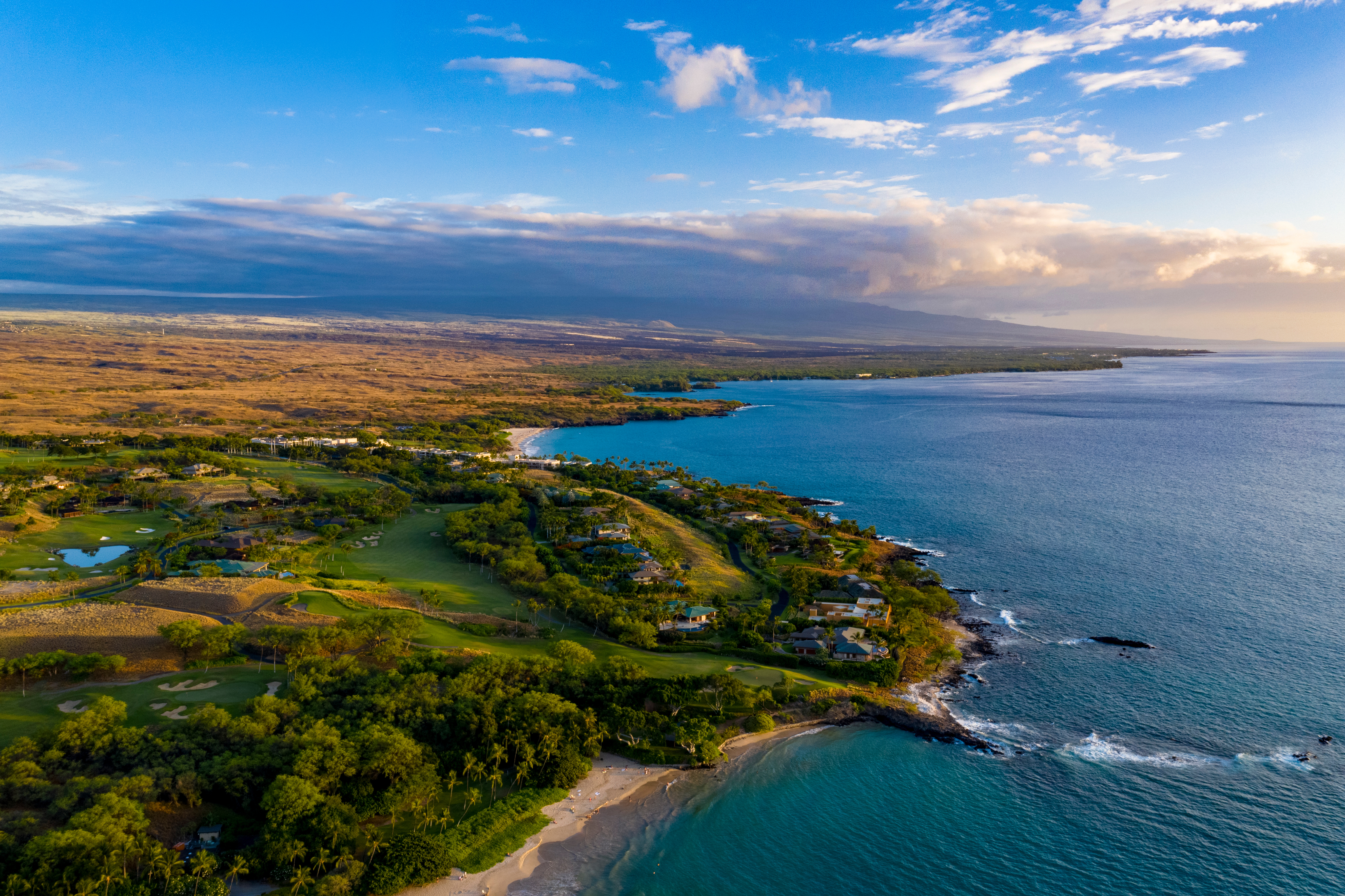
Buying a home on Hawaiʻi Island involves more than choosing the right house. If you’re considering moving to Hawaiʻi—or wondering what living in Hawaiʻi is actually like—there are some practical realities worth understanding before you buy.
Where a property is located can affect its climate, water supply, wastewater system, insurance, taxes, access, and even how quiet it is. Some of these things are obvious when you visit. Others may not become apparent until you start looking more closely at the property.
Here are 20 things I think every prospective buyer should understand before buying a home on Hawaiʻi Island.
The Island Itself
1. Hawaiʻi Island is a lot bigger than it looks on a map
At about 4,000 square miles, Hawaiʻi Island is larger than all of the other Hawaiian Islands combined.
That matters when you are deciding where you want to live.
Hawaiʻi Island is divided into nine districts: North Kohala, South Kohala, North Kona, South Kona, Kaʻū, Puna, South Hilo, North Hilo, and Hāmākua. But those names don’t tell the whole story. Within those districts are communities and areas that can feel quite different from one another.
Kailua-Kona, the Kohala Coast, Waikōloa, Hāwī, Waimea, Honokaʻa, Hilo, Pāhoa, and Volcano are not interchangeable places. They can have very different weather, housing stock, services, commute times, and lifestyles.
A property on the Kohala Coast is a very different proposition from one in Hilo, Puna, South Kona, Kaʻū, or the upland communities around Waimea.
Distances that look manageable on a map can become significant when you are commuting, shopping, going to medical appointments, or simply trying to get from one side of the island to the other.
Before you fall in love with a property, consider how often you will realistically want to make that drive.
2. Hawaiʻi Island has many different climates
One of the things that makes Hawaiʻi Island unusual is the variety of climates found here.
The mountains create major differences in rainfall, temperature, vegetation, and weather. You can leave a sunny, dry coastal area and drive into a cool, rainy environment within a relatively short distance.
That means “Hawaiʻi weather” isn’t one thing.
If you are considering a property, spend some time there—not just at midday on a beautiful day. Talk to people who live nearby. Ask what the weather is normally like, especially during the seasons when you are most likely to be there.
On the Kohala Coast, high wind is an occasional weather issue. It is what I consider our bad weather. Windy spells are infrequent, but they can be intense and prolonged.
3. Elevation matters more than many buyers expect
Temperature generally decreases as elevation increases, and the difference can be substantial.
A home at sea level and one several thousand feet higher can have very different temperatures, humidity, vegetation, and heating or cooling requirements.
Elevation can also affect how you experience the weather. A property that looks attractive in a warm coastal climate may feel quite different if it is located at a higher elevation.
If you are unfamiliar with Hawaiʻi Island, don’t assume that properties that are relatively close together will have similar living conditions.
4. Hawaiʻi Island takes its dark skies seriously
The night sky is one of Hawaiʻi Island’s less tangible but very real assets. Astronomy contributes in many ways to the Big Island’s economy. UH Hilo has a notable astronomy program, distinctive because of its proximity to Maunakea. Astronomy is one of the few established non-tourism, non-military economic sectors on the island, providing relatively high-skill employment.
The island’s relative lack of urban light, combined with lighting protections and the exceptional astronomical conditions around Maunakea, means that many areas have remarkably dark night skies.
For some buyers, that is a major attraction.
For others, it can be an adjustment. A rural property may be much darker at night than you are accustomed to, and outdoor lighting may be subject to regulations or community requirements.
If seeing the stars is part of what attracts you to Hawaiʻi Island, make a point of being at the property after dark.
Infrastructure and Daily Life
5. Not every home has County water
Water service varies considerably across the island.
Some properties have County water. Others may rely on catchment systems or other private water arrangements.
If a property has catchment, that isn’t necessarily a problem. It simply means the water system is part of the property and needs to be understood and maintained. The size and condition of the catchment tank, roof, gutters, filtration, pumps, and other components can all matter.
If you’re on catchment, treat the water: filter and disinfect it before drinking, and wash garden produce well. Rat lungworm disease is present on the island, and careful water handling is the practical protection.
Water availability, capacity, quality, and cost should be part of your due diligence—not an assumption.
6. There is no County residential curbside garbage service
Hawaiʻi Island does not have County residential curbside rubbish and recycling pickup.
Residents commonly take household waste to transfer stations, while private companies provide collection services in some areas.
This is one of those details that can be easy to overlook when you are buying a vacation home or relocating from the mainland.
Think about what daily life will actually look like. A property that is wonderful in other respects may feel less convenient if you don’t contract for a service to take your garbage away, or if regular trips to a transfer station are something you don’t want to make.
7. Property infrastructure can vary dramatically
Two homes that look similar on the MLS can have very different infrastructure.
One may have County water and sewer, while another has catchment and an individual wastewater system. One may have straightforward access and utilities; another may involve private roads, easements, pumps, tanks, or other infrastructure that requires ongoing maintenance.
Some communities have utilities underground, while others have utility poles and overhead wires that may be visible in ocean, mountain, or distant coastline views. If the view is important to you, pay attention to what is between the house and the view—not just what is visible in the listing photographs.
This is one reason I encourage buyers to look beyond the finishes and floor plan.
You are not just buying a house. You are buying the systems that make the house function.
8. Cesspools and septic systems deserve particular attention
Wastewater disposal is an important part of Hawaiʻi Island property due diligence.
Many properties have individual wastewater systems, including cesspools and septic systems. Depending on the property and the circumstances, upgrades or other requirements may apply. Current regulations require that all cesspools be converted to septic, sewer, or similar wastewater system by 2050. Priority cesspools have earlier deadlines.
The age and type of wastewater system, its condition, its capacity, and applicable Department of Health requirements should be understood before you purchase.
This is not something I would leave until the end of the inspection period. If wastewater is a significant issue for a particular property, it can affect both the cost of ownership and what you may be able to do with the property in the future.
9. “Remote” can be wonderful—and inconvenient
One of the great attractions of Hawaiʻi Island is that it is still possible to find places where life feels quiet, private, and far removed from a city.
But remoteness comes with tradeoffs.
You may be farther from grocery stores, medical services, restaurants, schools, airports, contractors, and other services. Roads can be winding or subject to weather-related conditions. Internet and other utilities may not be the same as what you are accustomed to on the mainland, although Starlink provides reliable internet to most locations.
For some people, remoteness is exactly what they want.
For others, it becomes frustrating after the novelty wears off.
Be honest with yourself about which kind of buyer you are.
10. Lava risk is part of Hawaiʻi Island real estate
Volcanic hazards are not simply a subject for tourists or geologists. They are part of property due diligence on Hawaiʻi Island.
The island is divided into nine lava-flow hazard zones, based on the locations and frequency of past eruptions, likely lava-flow paths, and other geological factors. Zone 1 represents the highest long-term lava-flow hazard and Zone 9 the lowest.
The zones are useful, but they are not a guarantee about what will happen to an individual property. Their boundaries are approximate, and the degree of hazard changes gradually rather than stopping at a precise line.
Earthquakes are part of life on Hawaiʻi Island. Thousands occur each year, and many are related to volcanic activity. Most are very small—too small to be felt—and pose little hazard. Larger earthquakes are much less common but can cause significant damage, so earthquake risk is another factor to consider when evaluating a property.
If you are considering a property, understand its location in relation to the applicable hazard information rather than relying on a general statement such as “it’s not near the volcano.”
11. Volcanoes are not simply a tourist attraction
Hawaiʻi Island is home to active volcanoes, and volcanic activity is part of the island’s living environment.
That doesn’t mean most residents spend their days worrying about eruptions. It does mean that volcanic activity can affect roads, air quality, tourism, insurance, property values, and daily life depending on what is happening and where you live.
Vog can also be a consideration, particularly for properties that depend on rainwater catchment.
The important point is not to be alarmed by the presence of volcanoes. It is to understand what their presence means for the particular property you are considering.
12. Hawaiʻi Island has a significant military presence
Hawaiʻi Island is home to Pōhakuloa Training Area (PTA), a more than 133,000-acre U.S. Department of Defense installation in the saddle between Mauna Loa, Mauna Kea, and Hualālai.
PTA is a major training facility. Military activities include live-fire exercises, maneuver training, aviation operations, and multinational exercises. Aircraft—including helicopters and fixed-wing military aircraft—operate in the area, and some training activity can be heard by surrounding communities.
The military also uses Kawaihae Harbor to move equipment and supplies to and from PTA. At times, military convoys travel from Kawaihae along public roads to or from the training area.
Large exercises, such as the biennial RIMPAC exercise, can bring increased military aircraft, ships, and other activity to the islands.

For most residents, military activity is an occasional rather than constant part of daily life. But if peace and quiet are particularly important to you, it is worth understanding the activity in the area where you are considering buying.
This is another good reason to visit a property more than once and at different times.
13. Oceanfront doesn’t necessarily mean beach
An oceanfront property can offer spectacular views and direct access to the coast—but “oceanfront” does not necessarily mean sandy beach.
Some coastlines are rocky, exposed, or bordered by lava cliffs. Ocean conditions can also make certain areas unsuitable for swimming.
If beach access is important to you, look at the actual shoreline rather than relying on the word “oceanfront.”
And remember that shoreline conditions and access can be very different from one property to the next.
14. The ocean is beautiful—and hard on houses
Salt air, wind, sun, humidity, and occasional severe weather can be tough on buildings and exterior finishes.
Oceanfront and near-ocean properties may require more maintenance than a comparable home farther inland. Metal, paint, roofing materials, windows, landscaping, mechanical equipment, appliances and electronics can all be affected by the coastal environment.
When you are looking at a property near the ocean, pay attention to its condition—not just its view.
Things That Can Affect What You Can Do With a Property
15. Permits aren’t the only thing to investigate—burial sites can matter, too
Hawaiʻi has a long history of Native Hawaiian and other ancestral burials, including unmarked burial sites.
If human remains or a burial site are discovered during excavation or other land-altering work, work in the immediate area must stop and the discovery must be reported. The State Historic Preservation Division and, when applicable, the appropriate Island Burial Council become involved in determining how the site will be treated.
A burial site may need to be preserved in place. That can require development plans to be changed and can significantly affect what can be built on the property.
This is particularly important when you are buying vacant land or a property where you have plans for substantial construction.
A property’s archaeological history is therefore more than an interesting piece of background. It can have practical consequences for what a future owner is able to do with the land.
16. Older and unpermitted improvements require careful investigation
Hawaiʻi Island has many older homes and properties with additions, renovations, converted spaces, decks, outbuildings, and other improvements.
Do not assume that everything you see was properly permitted simply because it has been there for years.
Permits, records, zoning, building requirements, and the property’s actual configuration should be investigated. Nonconforming structures or uses can affect financing, insurance, rebuilding, future improvements, and resale.
A property that appears to offer extra living space may not have the same value—or the same possibilities—as permitted living space.
17. Land-use restrictions can affect what you can do with a property
A property’s zoning is only part of the picture.
Federal, state, and County regulations may apply, as may subdivision restrictions, condominium documents, deed restrictions, easements, and other private agreements.
The fact that a use seems reasonable—or that a neighboring property is doing something similar—doesn’t necessarily mean you can do the same thing.
If you are buying with a particular future use in mind, investigate that use before you purchase rather than assuming it will be allowed.
18. Ownership structure matters
Most mainland buyers are accustomed to purchasing a fee-simple home and the land beneath it. Hawaiʻi also has properties with leasehold ownership.
The distinction matters.
A leasehold property involves a lease rather than ownership of the underlying land, and the terms of that lease can affect the value, financing, use, and long-term ownership of the property.
Leasehold properties listed in the Hawai‘i MLS must state in the first line of the listing: ”This is a leasehold property.” If you are considering a leasehold property, make sure you understand exactly what you are buying, how long the lease runs, what the lease requires, and what happens as the lease approaches expiration.
Financial and Practical Considerations
19. Property taxes are not always as simple as looking at the seller’s tax bill
A seller’s current property-tax bill does not necessarily tell you what your taxes will be after you purchase the property.
Tax classifications, exemptions, use, zoning, and other factors can affect the amount owed. In some circumstances, there can also be rollback-tax considerations.
If the numbers matter to your decision, verify the property’s current classification and tax situation with the County and, when appropriate, your tax professional.
Don’t build your ownership budget around an assumption that the seller’s current tax bill will simply become yours.
20. Insurance deserves attention early in the process
Insurance should not be an afterthought.
Availability, coverage, deductibles, and cost can be affected by factors including location, proximity to the ocean, flood exposure, wind and hurricane risk, volcanic hazards, and the characteristics of the property itself.
Flood insurance is a separate consideration for some properties and may be required by a lender.
Insurance markets can also change. A property that was readily insurable a few years ago may not have the same options or pricing today.
If you are seriously considering a property, find out what insurance will look like before you become too emotionally attached to it.
Wildfire is a real risk on this island, especially in dry leeward areas, and it directly shapes insurability. One practical step that helps: keep a cleared fire break around your structures, double the recommended distance if you have the space. Plan it carefully for low maintenance.
The Bottom Line: Living in Hawaiʻi Is About More Than the House
Hawaiʻi Island isn’t one community.
Waimea feels different from Hilo. The Kohala Coast feels different from South Kona. Rural subdivisions have a different rhythm from resort communities. Even adjacent neighborhoods can have noticeably different environments, services, restrictions, and expectations.
That is why I think it is important to spend time in the community where you are considering buying.
Drive the roads. Visit at different times of day. Listen for aircraft and other noise. Be there after dark. Look at the surrounding properties. Talk with people who live nearby. Consider the drive to the places you will actually need to go.
And then look beyond the house itself.
Before buying, you want to understand the property’s water, wastewater, utilities, access, permits, zoning and other land-use restrictions, ownership structure, taxes, insurance, environmental conditions, and surrounding environment. I recommend that you also consult with a local lender who is familiar with these issues and can manage the process, resolve underwriting concerns and provide a reliable outcome.
If you’re thinking about moving to Hawaiʻi, the question isn’t simply whether you can find a beautiful house.
It’s whether the property—and everything around it—fits the way you want to live.
That is the part of buying real estate in Hawaiʻi that deserves careful attention before you make the commitment.
With aloha,
Carol Porter
REALTOR® · RS-87584 · HI · Better Homes and Gardens Real Estate Island Lifestyle
Next step
Questions about your own search?
Every situation is different, and the details change the answer. Tell me what you’re considering and I’ll give you an honest read.