
Investing
Flooring Choices for Vacation Rentals (STVRs)
Refurbishing Investment Condos in Hawaiʻi
 By Carol Porter, Realtor® · August 17, 2026
I recently sat through an interactive webinar to learn about the latest trends in countertop and flooring materials. At one point during the class, the expert presenters asserted that luxury vinyl plank (LVP) flooring should never be installed on wooden subfloors, only on concrete. That sent me on a learning expedition, since LVP is so popular in rental condos on the Big Island.
I spent a few hours looking into that claim, and exploring the best flooring choices for high-traffic Short Term Vacation Rental condos (STVRs) on the Kona and Kohala Coasts of the Big Island of Hawaiʻi. First, I will address the claim that LVP should be installed on a concrete subfloor, then will discuss commonly used types of flooring on the Big Island’s “gold coast.”
A Myth: “Concrete Only”
The claim that LVP is incompatible with wood usually stems from two valid concerns: stability and moisture. Wooden subfloors have “give” or deflection; if a floor is too bouncy, the delicate click-lock mechanisms of LVP can snap. Additionally, in humid climates like the Kohala Coast, non-breathable vinyl can trap moisture against wood, potentially leading to rot. However, these are not reasons to avoid LVP—they are reasons to ensure your installation is handled correctly.
Fact: LVP Loves Wood (With Proper Prep)
LVP is one of the most common applications for wooden subfloors. The secret lies in the preparation. For a successful install, the wood must be smooth, structurally sound (at least 3/4” thick), and often covered with a 1/4” “skin” of finish-grade plywood to prevent telegraphing imperfections. In places like Waikoloa Beach Resort, where condos often use wood-truss systems, choosing a Rigid Core or Stone Plastic Composite (SPC) flooring is a game-changer because it handles slight subfloor flex far better than standard flexible vinyl.
The Upper-Floor Condo Challenge
With units on the 2nd or 3rd floor, the conversation shifts from durability to acoustics. Most resort HOAs have strict Impact Insulation Class (IIC) ratings. While concrete absorbs sound naturally, wood acts like a drum, vibrating footsteps directly into the unit below. Whether you choose LVP, hardwood, or tile, a high-end sound-dampening membrane is non-negotiable to keep both the HOA and your neighbors happy.
Comparing Your Options
Choosing the right material depends on your specific goals for your property:
Comparison of Subfloor Types:
| Feature | Concrete Foundation | Wooden Subfloor |
|---|---|---|
| Stability | Excellent; zero flex. | Variable; needs to be stiff. |
| Moisture | Risk of 'sweating' from below. | Risk of trapping spills/humidity. |
| Comfort | Very hard and cold. | More 'give' and naturally warmer. |
| Preparation | May need self-leveling compound. | Often needs an extra plywood skin. |
Flooring Choices
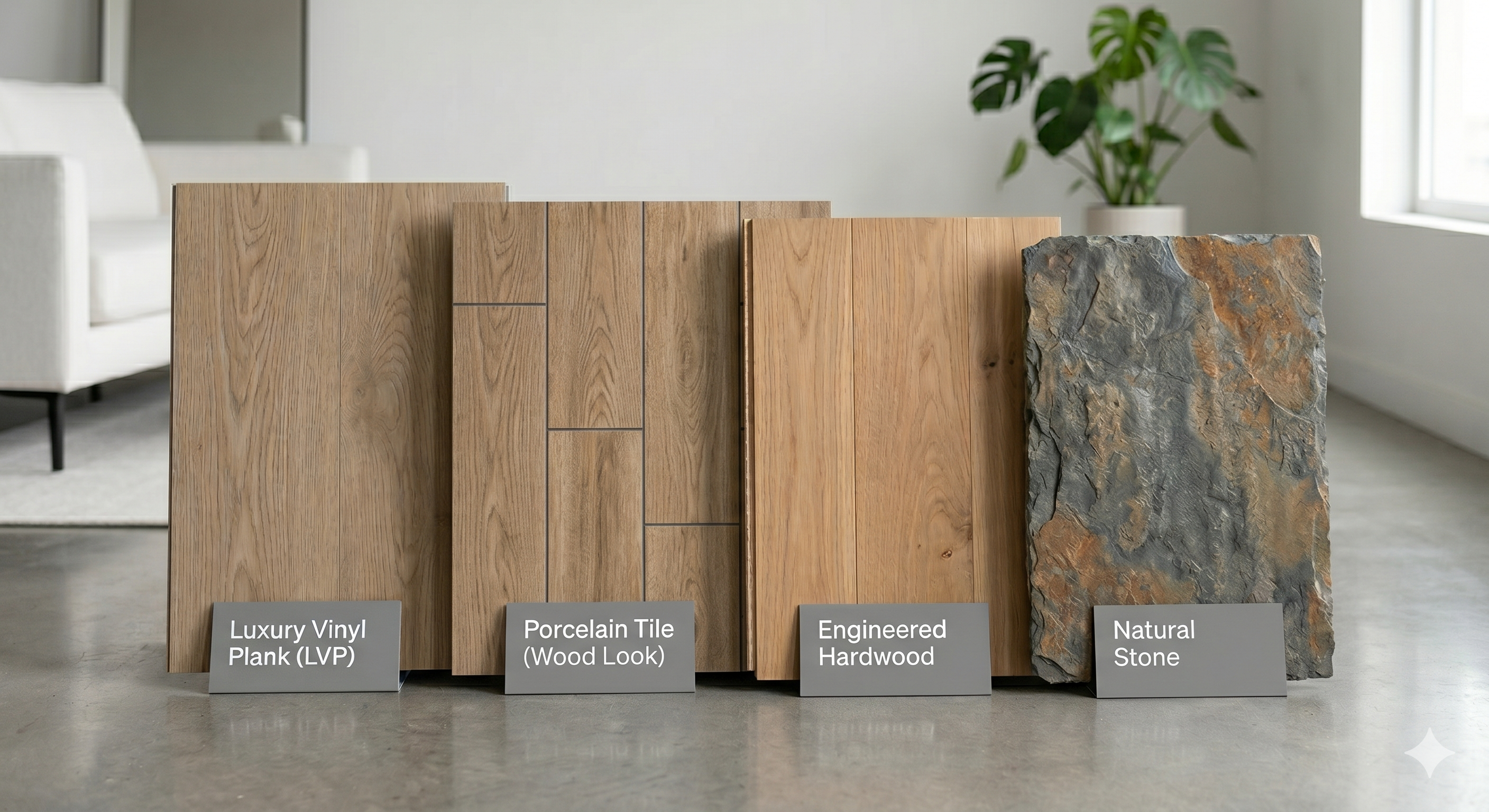
- Luxury Vinyl Plank (LVP): The most affordable and waterproof option. It’s soft and quiet but carries the highest risk for HOA compliance if not paired with a superior underlayment.
- Engineered Hardwood: The “gold standard” for luxury. It handles Hawaiʻi’s humidity better than solid wood and offers the highest resale value. However, it can be sensitive to sand and salt water tracked in from the beach.
- Porcelain Wood-Look Tile: Virtually “bulletproof” and perfect for high-occupancy rentals. It is completely unaffected by humidity but is the most expensive to install and requires a thick acoustic membrane on upper floors.
- Natural Stone (limestone, travertine): Offers unparalleled luxury, carries the highest installation cost, is durable but porous and needs professional sealing and specialized maintenance, and requires a thick acoustic membrane on upper floors.
The Verdict
For a high-end vacation rental, Porcelain Tile wins for longevity. But if you want to elevate the “sophistication” of your unit for a premium rental rate or future sale, Engineered Hardwood creates an atmosphere tile simply can’t match. Don’t let seminar “fiction” limit your choices—just make sure your subfloor is flat, dry, and rigid before you begin!
Lower Budget? Some Options
Here is a detailed breakdown of low-pile carpet and polished concrete as options for your vacation rental condo in Hawaiʻi, along with an added analysis of an epoxy floor as a resilient third option.
Low-Pile Carpet
In the specific context of a Hawaiian vacation rental, low-pile carpet (such as a commercial berber or structured loop) is a contentious choice that prioritizes acoustic comfort over practicality. Its primary benefit is noise dampening—essential for condos to reduce the sound of walking, luggage rolling, and furniture moving for the neighbors downstairs. A low-pile commercial grade also offers a durable, slip-resistant surface that feels soft and welcoming underfoot, which many guests appreciate in bedrooms. However, the Hawaiʻi climate presents significant drawbacks. Carpet easily traps fine volcanic sand (kona dust), retains humidity (which can lead to mustiness or mold), and is exceptionally difficult to keep pristine in a high-turnover environment. While new, it can feel cozy; but even a short-term rental with heavy foot traffic can quickly make carpet look worn and stained, potentially impacting guest reviews.
Polished Concrete
Polished concrete is arguably the most resilient and “climate-correct” flooring choice for an STVR condo in Hawaiʻi. It provides an indestructible, low-maintenance surface that easily handles sand, humidity, and spills without warping, staining (if properly sealed), or requiring grout cleaning. Its high thermal mass means it naturally feels cool underfoot—a massive bonus in a tropical climate—and its seamless, sleek appearance aligns perfectly with modern Hawaiian industrial-chic design aesthetics. From an operational perspective, turnovers are incredibly fast; it just requires quick sweeping and damp mopping. The main trade-off is acoustic and physical hardness. Concrete reflects sound, making a space very echoey and loud, and it provides no cushion. To balance the comfort for your guests, it is almost always necessary to add large, high-quality area rugs in the living room and under beds to define the space and provide some soft texture.
Epoxied Floor
An epoxied floor (sometimes called high-performance resinous flooring) is a highly practical, mid-tier alternative that bridges the gap between concrete and luxury vinyl plank. It offers many of the same durability benefits as concrete: it is exceptionally tough, impact-resistant, completely waterproof, and immune to sand and humidity. It forms a seamless, monolithic surface that is hygienic and incredibly easy for cleaning crews to maintain. However, what sets it apart from simple polished concrete is the flexibility of design. Epoxies can be customized with metallic pigments to mimic flowing water, volcanic rock, or colorful sands, offering a unique “wow factor” that photographs beautifully for rental listings. The main caveat for a Hawaiʻi condo is texture; the final finish is incredibly smooth and, when combined with water (from the beach or shower), can become dangerously slippery. When selecting an epoxy system, it is vital to specify that an anti-slip aggregate be mixed into the final clear topcoat.
With aloha,
Carol Porter
REALTOR® · RS-87584 · HI · Better Homes and Gardens Real Estate Island Lifestyle
Next step
Questions about your own search?
Every situation is different, and the details change the answer. Tell me what you’re considering and I’ll give you an honest read.