Cesspool Conversion Loans Are Open:
What Hawaiʻi Island Homeowners Should Know
Hawaiʻi's cesspool conversion loans are open. See who qualifies on Hawaiʻi Island, what the loans and subsidies cover, and how to apply.
 By Carol Porter, REALTOR® · November 25, 2026
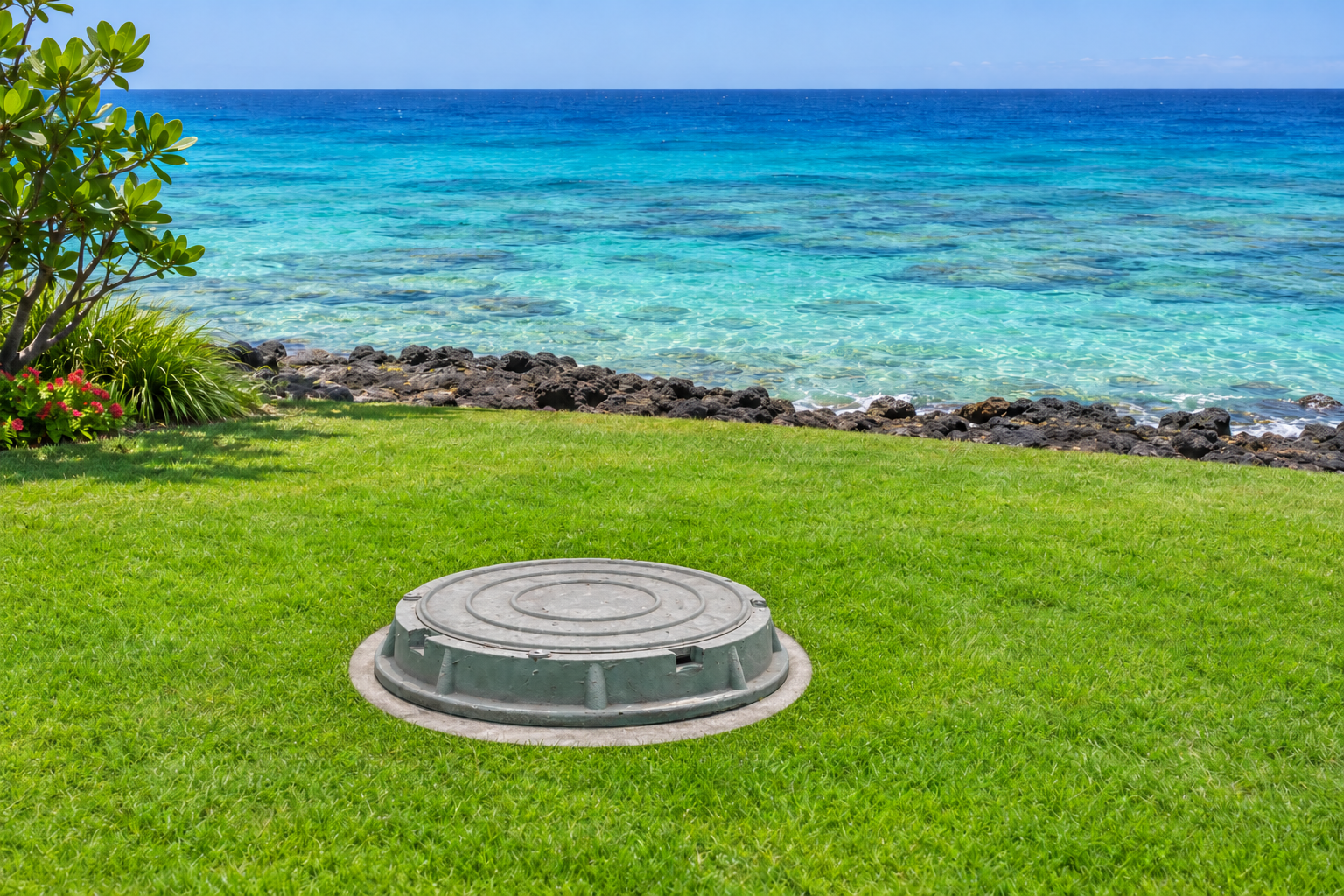
If your Hawaiʻi Island home has a cesspool, a new state program may help you pay to replace it. Applications opened November 23, 2026, for the Hawaiʻi Green Infrastructure Authority’s Cesspool Conversion Loan Program. The first round is for homeowners who live in the property as their primary residence, meet the household income limit, and have a Priority 1 or 2 cesspool in an eligible rural area.
The program uses Hawaiʻi Green Fee funding to offer low-interest loans, subsidies that can reduce what eligible households need to borrow, and limited help with engineering design costs. Governor Josh Green signed the legislation on July 8, 2026, as Act 204. Representative Nicole Lowen of District 7 introduced HB 1618 with other House members. State launch announcement · Signed Act 204
Who can apply
In Phase 1, you must own and occupy the home as your primary residence. Your total gross annual household income must be below 140% of area median income (AMI). The property must have a Priority 1 or 2 cesspool in an eligible rural area, and the conversion must be a stand-alone project. Conversions tied to home renovations or accessory dwelling unit projects are ineligible in this round. Check the income and rural eligibility links on the state program page and look up your property in the University of Hawaiʻi Cesspool Prioritization Tool.
Phase 1 has a $450,000 lending allocation per county. Beginning February 2, 2027, unused county funds will be made available in the order completed applications were received. On April 2, 2027, homeowners with household income at or above 140% of AMI and up to $400,000 may apply for remaining funds. The state may add non-rural Priority 3 cesspools later if additional funds become available.
| Loan qualification | Below 140% of AMI | 140% of AMI or more, up to $400,000 |
|---|---|---|
| Minimum credit score | 600 | 720 |
| Maximum debt-to-income ratio | 55% | 45% |
| Maximum combined loan-to-value ratio | 85% | 80% |
Applicants must be current on real property taxes and have no bankruptcy filing in the previous two years. Department of Hawaiian Home Lands lessees are currently ineligible. DHHL is working with Hawaiʻi Community Lending on a separate pilot, with more information expected in 2027. Program eligibility and phases · State launch announcement
What the loan could cost
Your household income and the year your loan is approved determine the rate and any subsidy. These are the terms for loans approved from 2026 through 2030. The published schedule has higher rates and smaller subsidies in later years. Full rate and subsidy schedule
| Household income | Interest rate | Conversion subsidy |
|---|---|---|
| Below 80% of AMI | 1% | 50% of eligible cost, up to $20,000 |
| 80% to below 140% of AMI | 2% | 25% of eligible cost, up to $10,000 |
| 140% of AMI or more | 4% | None |
Households below 120% of AMI can choose a 15-year interest-only loan, with the full amount borrowed due at the end, or a 25-year loan that pays off principal and interest over the term. Households from 120% to below 140% of AMI repay principal and interest over 25 years. Households at or above 140% of AMI repay over 15 years.
For a $40,000 conversion, HGIA gives the example of a household below 80% of AMI receiving a $20,000 subsidy and borrowing the other $20,000 at 1%. With the interest-only option, the household pays $200 a year in interest and owes the entire $20,000 at the end of year 15. A qualifying household in the 4% tier that borrows the full $40,000 would pay about $296 a month over 15 years. If you’re considering the interest-only option, include the final principal payment in your plans. HGIA repayment terms and examples
Engineering help and a Hawaiʻi County alternative
For a limited time, eligible low- and moderate-income households may qualify for help with engineering design through the U.S. Environmental Protection Agency’s Closing America’s Wastewater Access Gap Initiative. The pilot can cover up to 90% of design costs, and your share may be eligible for financing through the state loan. Ask about assistance before commissioning design work. The pilot does not reimburse work already completed, and complex sites may be ineligible. Engineering design assistance
Hawaiʻi County’s Home Improvement Loan Program is another option for qualifying low- and moderate-income homeowners who occupy the property as their primary residence. The county lists connection to a county sewer as an eligible use. If your property needs an on-site system, confirm that the county will cover the proposed work. Loans run from $2,500 to $50,000 at 3% simple interest. Payments are deferred for 15 years, when the balance comes due. Eligible homeowners age 62 or older, or homeowners with a disability, may qualify for forgiveness of half the principal balance. The county and state loans cannot be combined. Hawaiʻi County Home Improvement Loan Program · State program’s county guidance
Why this matters on Hawaiʻi Island
Hawaiʻi County reported 48,596 cesspools in 2023. The assessment identified 5,119 on Hawaiʻi Island as Priority 1, about 37% of the statewide Priority 1 inventory. On the island, the highest-priority cesspools are concentrated in West Hawaiʻi, including near Puakō and Hōlualoa. Priority 2 areas include Hōlualoa, areas north of Captain Cook, and parts of Hilo. Use the state’s property lookup to check an individual parcel. 2023 county reporting · 2026 local coverage
The Department of Health’s 2026–2030 management plan estimates that Hawaiʻi’s roughly 83,000 cesspools discharge about 55 million gallons of untreated wastewater a day. Earlier research found that 71% of Hawaiʻi County households were without centralized sewer service, the highest share in the state. In 2023, the reported statewide funding gap was about $1.1 billion, and estimated construction costs ranged from $10,000 to $38,000. For a budget today, get an estimate for the property that includes design and installation. Department of Health management plan · Cesspool conversion finance study · 2023 cost and funding estimates
The statewide deadline is before January 1, 2050. Under the law established by Act 125 in 2017, cesspools must be upgraded or converted to a Department of Health-approved system, such as an approved septic or aerobic treatment system, or connected to a sewer. The Department of Health can grant an exemption where the owner documents that conversion or connection is infeasible. The working group proposed advancing the deadline for the highest-priority cesspools to 2030. The statutory deadline remains January 1, 2050. Hawaiʻi Revised Statutes §342D-72 · Department of Health cesspool FAQ · Reporting on the 2030 proposal
What I’d check before buying or selling
If you’re buying, ask early whether the home is on a cesspool, an approved on-site system, or a sewer. If the seller says the cesspool was converted, ask for the Department of Health’s approval for use. If the cesspool is still in service, look up its priority and get a property-specific estimate. A cesspool can be manageable when you know what replacement is likely to cost. I’d budget for the work based on the property and count a subsidy once eligibility and funding are confirmed. See the conversion set-aside in my Hawaiʻi Island monthly ownership budget.
If you’re selling, gather the wastewater records you have, including permits, plans, and any approval for use. For an unconverted cesspool, a current estimate can give buyers a firmer number to work with. If you’re considering a state loan before listing, ask HGIA how the recorded mortgage would be handled at sale. HGIA’s loan and installation process
How to apply
Go to the state program page and select Apply Now to open HGIA’s Banyan portal. Gather government-issued identification and the most recent federal tax returns, including all schedules, for everyone on title and every adult living at the property. You’ll also need the current homeowner’s insurance policy, the required additional-applicant forms, and applicable documents such as a trust certification or lease. Apply for a cesspool conversion loan
HGIA checks applicant eligibility before the design and construction review. If you qualify for design assistance, an engineer will be assigned. Otherwise, you select a licensed engineer to assess the site, prepare plans, and submit them to the Department of Health. The application is complete only after HGIA receives the required paperwork, including the engineer and contractor proposals. Funding is limited and HGIA processes completed applications in the order received, so start gathering your records early. Application checklist and project steps
With aloha,
Carol Porter
REALTOR® · RS-87584 · HI · Better Homes and Gardens Real Estate Island Lifestyle
This article provides general information about state cesspool conversion programs. Confirm eligibility, rates, subsidies, and application details with the Hawaiʻi Green Infrastructure Authority before relying on them for a decision.
Next step
Questions about your own search?
Every situation is different, and the details change the answer. Tell me what you’re considering and I’ll give you an honest read.