
Selling
The Spaces That Matter When Selling Your Hawaiʻi Island Home
 By Carol Porter, Realtor® · August 26, 2026
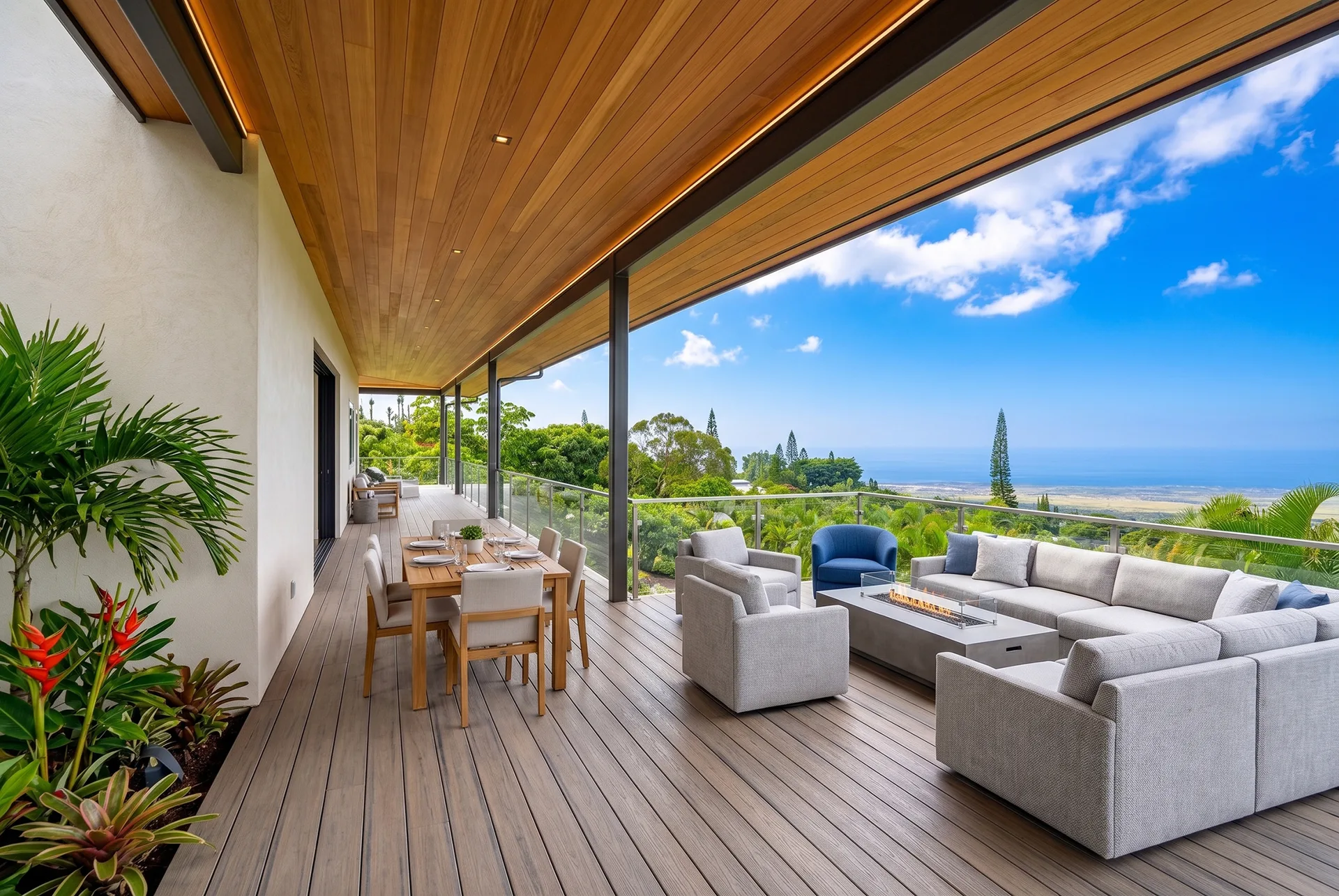
When you sell a home, buyers often make an initial judgment before they ever walk through the door. The description and photography need to represent the property accurately and well, and the home itself needs to show cleanly when buyers arrive.
That doesn’t mean redesigning your house. It means identifying what matters most about this property and making those spaces and features read clearly.
Preparation should begin well before the listing date. Start by looking at the competition: the homes currently for sale that a buyer might consider alongside yours, as well as recent comparable sales. Look at condition, presentation, features, and price. Your goal isn’t to make your home look like every other listing. It is to understand what a buyer will see when comparing it with the alternatives.
Prepare the house before you prepare the listing
A clean, well-maintained and uncluttered home gives buyers fewer reasons to focus on things that aren’t the reason they came to see it.
Deep cleaning and serious decluttering are always worthwhile. So is addressing obvious deferred maintenance where doing so makes economic sense. Broken windows, malfunctioning doors, neglected landscaping, worn finishes, and mechanical or plumbing issues can distract buyers and become negotiating points later.
On Hawaiʻi Island, there can be more to this preparation than cosmetics. Depending on the property, it may be important to gather information about permits, additions or alterations, roofing and other major systems, solar or photovoltaic equipment, water and wastewater systems, warranties, service records, and HOA or resort requirements.
I also like sellers to consider a pre-listing inspection. It isn’t necessary or appropriate for every property, and an inspection won’t eliminate a buyer’s due-diligence process. But knowing what an inspector is likely to find gives a seller an opportunity to decide in advance what to repair, what to disclose, and what to leave as-is.
The objective isn’t to fix everything. It is to avoid being surprised.
And, of course, preparation includes pricing. A beautifully presented home that is priced incorrectly is still incorrectly positioned.
The outdoor room that isn’t a room
Living in Hawaiʻi means that outdoor space can function as part of the house.
The indoor-outdoor connection may be one of the most important features a Hawaiʻi Island home has. In many resort homes, pocket doors open the living area directly onto a covered lānai, where people actually spend much of their time. The lānai may connect to a pool and spa, outdoor kitchen, dining area, or several places to sit and relax.
If your home has those features, show them.
Open the doors. Clear the threshold. Arrange the furniture so that the eye moves naturally from the interior to the lānai and beyond. Make sure the outdoor kitchen and dining areas are clean and usable. If there is a view, don’t let furniture, clutter, or dirty glass compete with it.
Not every Hawaiʻi Island home has a resort-style lānai, and it doesn’t need one. But almost every home has some version of outdoor living—perhaps a small covered lānai, a garden, a yard, a patio, or simply a pleasant place to sit outside.
Show buyers what outdoor living means at this property.
The kitchen
The kitchen is one of the spaces buyers examine closely because replacing or substantially remodeling one is expensive and disruptive.
You don’t necessarily need a new kitchen. You do need the existing kitchen to look clean, functional, and appropriately maintained for the property.
Clear the counters as much as practical. Put away small appliances and anything that makes the space feel crowded. Clean the appliances, cabinets, backsplash, and floors. If there are obvious repairs that need attention, decide whether making them now will improve the property’s presentation or reduce a likely objection later.
If the property is likely to appeal to vacation-home or vacation-rental buyers, think about how the kitchen will function for people who are cooking and entertaining there. Give them enough visual space to imagine that.
The living room
The living room is where buyers begin imagining how they will use the house.
Remove the things that make the room feel like someone else’s personal space—family photographs, collections, excessive decorative objects, and furniture that isn’t needed.
Arrange the furniture to create a clear conversation area. If there is a significant view, orient the room toward it rather than blocking it.
And don’t underestimate the value of empty space. A large piece of furniture can make a room feel smaller than it is. Natural light can make it feel larger.
Open the curtains and blinds. Clean the windows. Let the room breathe.
The primary bedroom
The primary bedroom should feel restful, not like a storage area.
Clear the nightstands and other surfaces. Reduce the amount of clothing in the closet so buyers can see the storage capacity. Make the bed the focal point with clean, simple bedding.
If you buy new bedding for the listing, take it with you when you move. That’s a staging purchase that can do double duty.
The entry and bathrooms
The entry establishes the first impression once buyers arrive. Give them a clear path into the house. Remove excess furniture, shoes, packages, and anything else that makes the entrance feel crowded.
The primary or main bathroom is another place where buyers tend to notice condition. Clean the fixtures thoroughly, clear the counters, remove unnecessary personal items, and use fresh towels.
You don’t have to turn an ordinary bathroom into a luxury spa. It simply needs to feel clean, cared for, and easy to imagine using.
Don’t forget what isn’t a room
Some of the most important features of a Hawaiʻi Island property aren’t inside the house at all.
Landscaping, the driveway, garage or carport, pool and spa, outdoor storage, garden areas, views, and the condition of exterior surfaces all contribute to the buyer’s impression.
A spectacular view deserves an unobstructed view. Trim bushes or trees if needed to optimize the view. A beautiful garden deserves to be maintained. A pool should look inviting. A garage or storage area should demonstrate its usefulness rather than its capacity to hold everything the seller hasn’t decided what to do with.
The property should tell a coherent story from the street—or driveway—to the entry, through the house, and out into the landscape.
Furnished can be a feature
Selling a home furnished is not necessarily a disadvantage. In resort communities, furnished sales are common, and furniture can help buyers understand how a vacation home or second home actually functions.
Furnishing a Hawaiʻi Island home can also be less convenient than furnishing a mainland home. Finding pieces locally, arranging delivery, and shipping furniture to the island can take time and money.
So don’t automatically strip a furnished property before putting it on the market.
Instead, look critically at what is there. Remove pieces that are oversized, damaged, redundant, or distracting. Rearrange what remains to make the rooms feel spacious and useful. The goal is not necessarily to make the house look empty. It is to help buyers see themselves using the space.
Sometimes the furniture is part of what you’re selling.
Stage what moves the needle
You don’t need to spend money on every possible improvement.
The right preparation depends on the property, its condition, its location, its likely buyer, and the competition. A luxury resort home may benefit from a different approach than a modest home in a residential subdivision. A vacant house presents different challenges from a home that is furnished and occupied.
The question I ask is: What will make the greatest difference in how a buyer experiences this particular property?
That is where the preparation effort belongs.
When we show homes, we turn on every light, so that everything is clear and bright for the prospective buyers. Personally, I find warm light most attractive and welcoming. I believe that it is essential that all light fixtures throughout the home use the same temperature of light bulb. An exception is specific task lighting, but even then the same temperature is optimal.
A note on virtual staging and Hawaiʻi Information Service MLS rules
Physical staging isn’t always practical or necessary. Virtual staging can be useful, particularly when a room is vacant or its scale is difficult to understand from a photograph.
But virtual staging doesn’t replace preparing the actual property. Buyers will eventually walk through the house, and they will see the condition of the rooms, windows, lānai, landscaping, appliances, and other features for themselves.
There are also specific Hawaiʻi Information Service MLS requirements for virtually staged photographs. Under the current MLS rules, virtually staged photos must include the words “virtually staged” in the public remarks or caption field, and a non-staged image must appear immediately before or after the virtually staged photo (Hawaiʻi MLS Rule §3.05(b)). The rules also prohibit photo collages in the MLS listing record, and captions may appear only in the caption field or public remarks—not printed onto the photograph itself.
That includes digital changes such as removing personal items that will not convey with the property as well as digitally adding furnishings or décor.
The rules are worth knowing before the photographer arrives, not after the listing is live.
The goal isn’t perfection
The goal of preparation isn’t to make your home look like a magazine spread.
It is to make the property easy to understand.
Buyers should be able to see its best features, move through it comfortably, understand how the spaces relate to one another, and imagine living there. Good preparation removes distractions without trying to turn one house into another.
If you’re thinking about selling, I’m happy to walk through the property with you before you start spending money. We can look at the spaces that matter, the improvements that may be worth making, and the things you can safely leave alone.
Text or call me, and let’s create a preparation and marketing plan for your property.
With aloha,
Carol Porter
REALTOR® · RS-87584 · HI · Better Homes and Gardens Real Estate Island Lifestyle
Next step
Questions about your own search?
Every situation is different, and the details change the answer. Tell me what you’re considering and I’ll give you an honest read.