
Area guide · Kaʻū
Kaʻū:
The Vast, Far Southern Reach of the Island
Kaʻū is the island's great, quiet south: an enormous, lightly populated district of cattle country, ʻōhiʻa forest, coffee farms and black-sand shores that most visitors never reach. It is also one of the most distinctive real estate markets on the island, where affordable land and real independence come with a different kind of due diligence. After more than 22 years on the Big Island, it remains one of my favorite places to help buyers understand, so this guide covers both the character and the questions.
The lay of the land
Where Kaʻū sits on the island
Kaʻū is the kind of place that surprises first-time visitors by its scale. Communities are strung along miles of two-lane highway, the weather changes with every few hundred feet of elevation, and the day-to-day reality is rural, quiet and unhurried. The facts below are the ones that matter most when you start to picture yourself here.
-
The island's southernmost district
Kaʻū wraps the island's south end, from the upper slopes of Mauna Loa down to Ka Lae, South Point, the southernmost point of the United States. Its communities string along Highway 11, the two-lane road that loops the south of the island, and the district is one of the island's oldest, one of the six original moku, or districts, of ancient Hawaiʻi.
-
Nāʻālehu, Waiʻōhinu and Pāhala
Nāʻālehu, the district's core town, is often billed as the southernmost town in the United States; nearby Waiʻōhinu is known for its enormous monkeypod trees and historic character; and Pāhala grew up around the sugar industry and is now the heart of Kaʻū coffee country.
-
Ocean View
West of Nāʻālehu, Hawaiian Ocean View Estates and Hawaiian Ocean View Ranchos climb the flank of Mauna Loa. Ocean View has grown into the district's largest community, a land-heavy, off-grid-minded part of Kaʻū where most lots are an acre and the subdivision is enormous.
-
Microclimates step with elevation
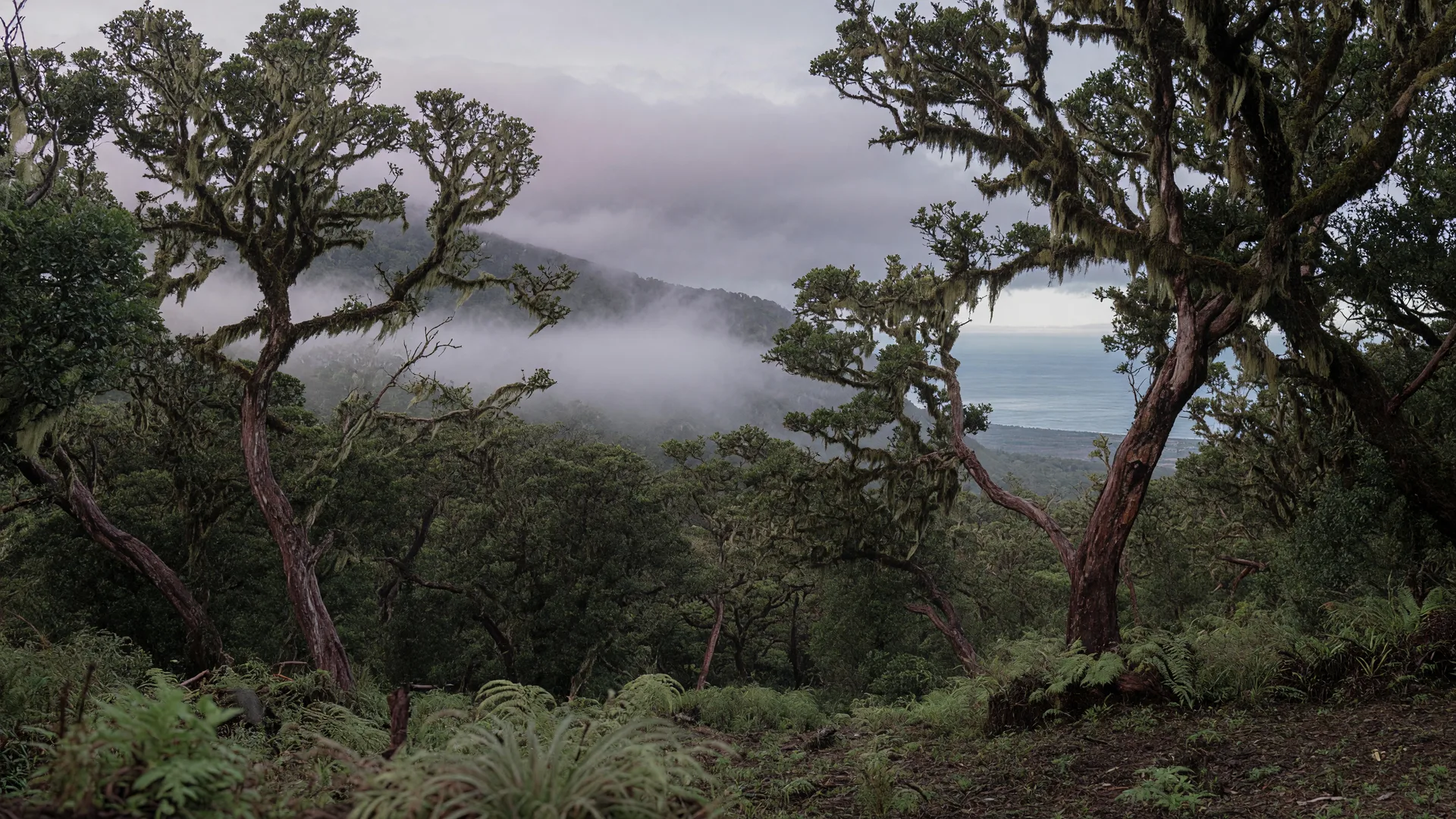
Pāhala and Wood Valley sit higher and enjoy cooler, wetter weather, which is exactly what makes the Kaʻū coffee belt work. The coast at Punaluʻu is warm and sunny, while Ocean View shows the change in miniature: lower lots are hot, dry and exposed, and upper lots are cooler, cloudier and wetter.
-
Volcano and the park
The district's northeastern corner extends into Hawaiʻi Volcanoes National Park, where the summit of Kīlauea and its ʻōhiʻa forest divide Kaʻū from Puna. A surprising share of the district's character, and its weather, comes from living so close to the volcano.
-
Character: ranching, coffee and quiet
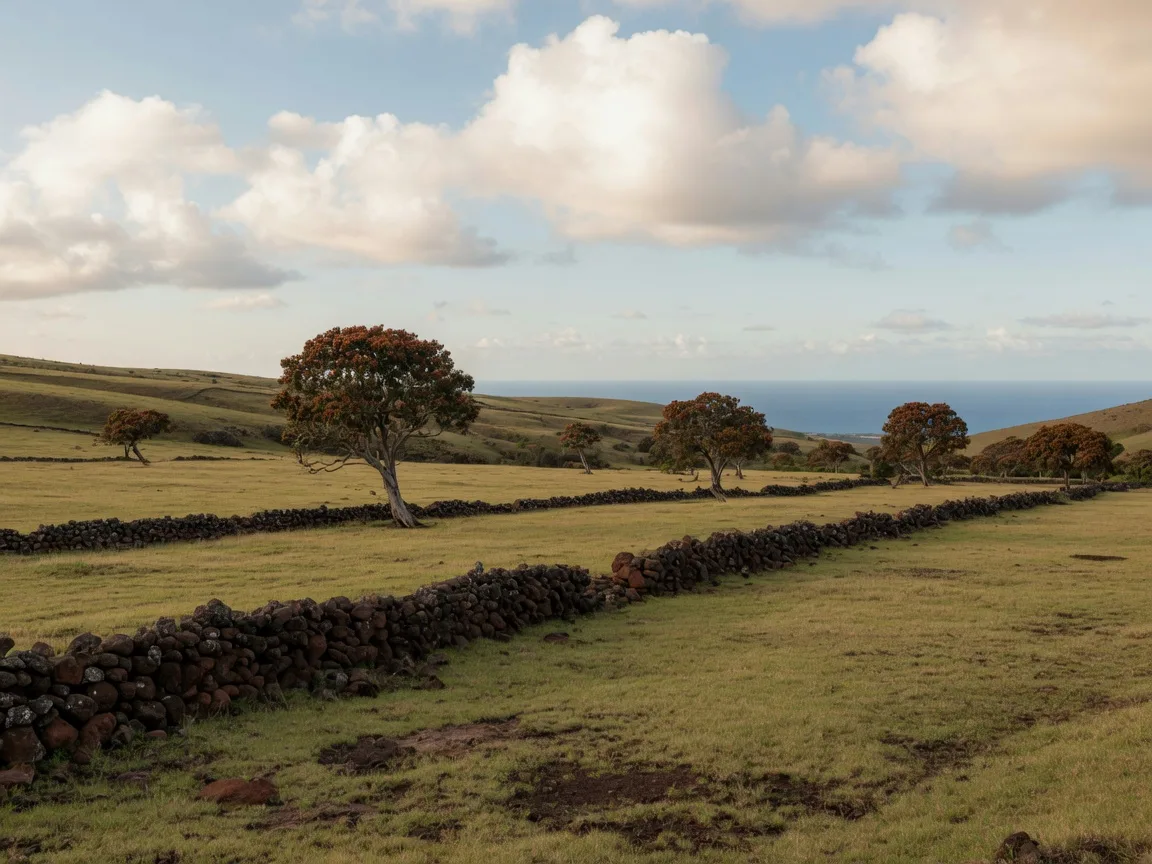
Working ranches, Kaʻū coffee farms, orchards, macadamia groves and a deeply rural way of life define the district today. With one of the island's smallest populations spread across a vast area, Kaʻū is quiet by nearly any measure.
The local view
A few real stops between showings in Kaʻū.
Covering this district means long drives and empty roads, so the stops matter. The black-sand shore at Punaluʻu, coffee in Pāhala and Ocean View: these are the places I would send buyers and friends alike. Real places, real addresses, real phone numbers, and always confirm hours before you go.
Punaluʻu Bake Shop
95-5642 Māmalahoa Hwy, Nāʻālehu, HI 96772
Closed indefinitely since Hurricane Lala. The owners plan to rebuild, but don't plan a visit around it.
95-1148 Nāʻālehu Spur Rd, Nāʻālehu, HI 96772
4.3 · 624 reviews on Google
808-929-9717
A few real stops between showings in the Kaʻū district. Hours, menus and market schedules change, so always confirm before you go.
Buying in Kaʻū
What buyers need to understand before the offer
Kaʻū is not one homogeneous market. Upper forest lots, plantation-era properties around Pāhala, coastal parcels near Punaluʻu and the one-acre subdivision lots of Ocean View are different products with different questions. I wrote the full story, including an off-grid tiny house that taught me (and my buyer) a great deal about due diligence, in my Journal post on Buying in Kaʻū; the essentials below are what I check with every client.
-
Why land here is affordable
Much of Kaʻū lies in Lava Zones 1 and 2, the two highest lava-flow hazard zones on the island: Hawaiian Ocean View Estates, for example, is largely in Zone 2 on the southwest flank of Mauna Loa. Those designations are one reason land values run well below the resort coast; remoteness, infrastructure, access to services, and financing and insurance constraints shape the market alongside them.
-
A market unlike the resort coast
In parts of Kaʻū, unpermitted and off-grid construction is not unusual, and cash transactions are common because financing and insurance can be more complicated than elsewhere on the island. Catchment, solar, generators, septic systems, cesspools, private roads and owner-built structures may all be part of the equation. None of that makes a property a bad purchase; it changes the due diligence.
-
Permits and quality are separate questions
Unpermitted tells you the county has not reviewed and approved the work through the normal permitting and inspection process, and it says nothing by itself about how well the structure was built. An exceptionally well-built home can still carry no permit record. Investigate both, separately.
-
Documentation matters
When there is no county paper trail, ask the seller for dated photographs, videos, receipts, plans and other construction records. That documentation does not make an unpermitted structure permitted, whether it can be permitted as built is ultimately the county's determination, but it gives you and your licensed professionals a real starting point.
-
The systems matter as much as the siding
Solar capacity, battery condition, generator integration, catchment tank size, filtration and treatment, wastewater and the maintenance each one demands: with an off-grid property, the due diligence extends well beyond the walls.
-
Location is a commitment
Distance to groceries, medical care, hardware, fuel, schools and emergency services shapes daily life, and a road that looks fine in the sun can be a different proposition in heavy rain. Insurance and financing are equally property-specific, so each parcel gets its own conversation.
The full story, from the island's deep south
How the tiny-house sale unfolded, what the permits showed, and the honest lessons it holds for any buyer looking at Kaʻū.
Practical notes
Getting there, getting around in Kaʻū
There is no single town center to Kaʻū: the district is strung along miles of highway, and an address near Ocean View is a long drive from an address near Pāhala. Place your errands, schools and community on the map before you choose.
Highway 11 is the spine
Every community in Kaʻū sits on or near Highway 11, the two-lane road that loops the island's south end. The same road connects Kaʻū to Hilo through Volcano and continues north to Kona, so nearly every trip, to work, school, shopping or care, starts and ends on it.
Give the drive its due
Punaluʻu is roughly 57 miles south of Hilo, about an hour's drive, and Kailua-Kona is roughly 85 miles away, about 90 minutes by road; Nāʻālehu sits further still, about an hour and 40 minutes from Hilo. For most of the district, a day trip to Hilo or Kona for bigger errands is simply part of life.
Health care is Kaʻū Hospital
Kaʻū Hospital in Pāhala is the district's only inpatient facility, a federally certified Critical Access Hospital with a 24-hour emergency department. Higher-level acute care means a transfer to Hilo or Kona, a drive of an hour or two depending on weather and road conditions.
Fuel, groceries and connectivity
Groceries and fuel are available at the district's small service centers along Highway 11, but selection is limited; most households do a bigger shop in Hilo or Kona. Rural broadband varies widely by area, so verify internet at the exact address, and check Starlink and cellular options as well.
A note on weather and roads: rain bands, fog and the storms that reshape this coast are worth taking seriously. In August 2026, devastating flash flooding from Hurricane Lala struck Nāʻālehu and the surrounding coast, so check road conditions before long drives and give yourself time.
Kaʻū could be your quiet corner of the island.
Tell me what draws you to the deep south, the space, the coffee, the off-grid life, and I'll help you check the parcel and decide with confidence.