
Design Matters: Hawaiian-style
The Ground Beneath the House:
Geopathic Stress, Geology, the Search for Healthy Places
From underground water and magnetic anomalies to volcanic gases and the quality of indoor environments, what do we know about the influences of a building site on the people who live there?
 By Carol Porter, Realtor® · November 7, 2026
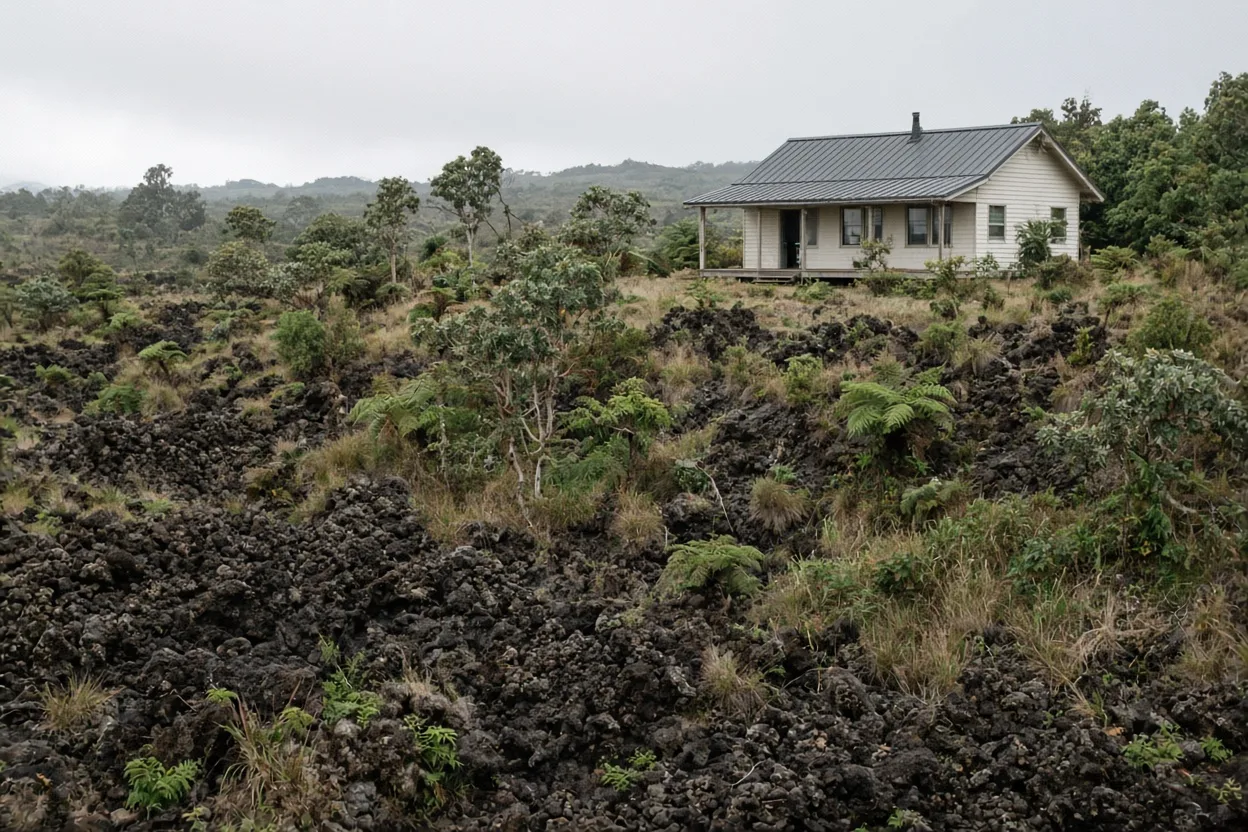
When we evaluate a home, we usually begin with what we can see: its architecture, condition, orientation, surroundings, and the way its rooms relate to one another. But what about the ground beneath it?
For years, I’ve been interested in geopathic stress—the possibility that certain characteristics of a location might influence the health or well-being of people who spend time there. The subject ranges from underground water and geological faults to magnetic anomalies, proposed earth-energy networks, and questions about biological sensitivity.
Some of these phenomena are measurable and well established. Others are hypotheses, and some have not been demonstrated despite attempts to test them. Hawaiʻi Island, with its volcanic geology and varied environments, is an interesting place to examine the distinctions.
What Is Geopathic Stress?
Geopathic stress is a term used by practitioners for purported adverse influences associated with particular locations. Proposed causes include groundwater movement, geological fractures, natural electromagnetic variations, and invisible earth-energy networks. Some practitioners associate prolonged exposure, especially during sleep, with fatigue, poor sleep, or illness.
The difficulty is that geopathic stress lacks a consistently accepted scientific definition, a standardized measurement method, and a demonstrated causal mechanism connecting its proposed fields to these outcomes. That does not mean the physical environment beneath a house is irrelevant. It means several different questions have been combined under one label and must be evaluated separately.
Traditional Site Selection and Cultural Context
People have considered the suitability of building sites for centuries. Chinese feng shui considers landforms, water, orientation, and spatial relationships. European geomancy and dowsing traditions have also associated certain sites with favorable or unfavorable influences. These traditions have different histories and should not be treated as interchangeable.
A historical practice may preserve useful observations about drainage, sunlight, shelter, or soil. It may also incorporate symbolic explanations that cannot be confirmed through measurement. Historical persistence alone does not validate a proposed physical mechanism.
Traditional Hawaiian Site Selection: The Kahuna Kuhikuhi Puʻuone
Long before modern geotechnical investigations, traditional Hawaiian communities recognized the importance of selecting appropriate locations for homes, ceremonial structures, and other activities.
In The Polynesian Family System in Kaʻū, Hawaiʻi, E. S. Craighill Handy and Mary Kawena Pukui describe the role of a specialist consulted in connection with choosing a house site. Known as a kahuna kuhikuhi puʻuone, this person advised on where a structure should stand and how it should be oriented.
The selection involved more than finding a convenient location. Physical characteristics of the land mattered. Sites beneath unstable cliffs could present hazards; places subject to dampness or uncomfortable winds might be unsuitable for habitation. The relationship of the building to the surrounding terrain was an important consideration.
Cultural and spiritual considerations were also part of the process. A proposed location could be evaluated in relation to places of religious significance, burial grounds, and other features understood within the traditional Hawaiian cultural system.
The expertise associated with the kahuna kuhikuhi puʻuone also extended to the planning and siting of heiau, where the selection and arrangement of a site carried particular religious and ceremonial significance.
There is an interesting parallel with Chinese feng shui and European traditions of geomancy. Each reflects the idea that the placement of a building matters and that evaluating a site may require specialized knowledge.
But the traditions should not be treated as interchangeable. Hawaiian site-selection practices developed within their own cultural, environmental, and religious context. Their purposes cannot simply be translated into the terminology of feng shui or modern geopathic-stress theories.
What particularly interests me is the combination of environmental observation and cultural knowledge. Some of the conditions that could make a site undesirable—unstable terrain, persistent dampness, or excessive exposure—remain relevant to residential design and construction today.
Other considerations reflected Hawaiian understandings of the land, sacred places, and relationships among people, ancestors, and their surroundings. Those deserve to be understood on their own terms, rather than reinterpreted as evidence for a contemporary theory of invisible earth-energy fields.
The tradition reminds us that choosing a building site has never been solely an engineering exercise. It also involves how people understand the land and their place within it.
Groundwater, Fractures, and Faults
Groundwater and geological fractures are real. Water moves through porous materials and subsurface pathways; faults and fractures can affect drainage, foundations, and ground stability. These conditions can be important to construction and site evaluation.
What has not been established is the additional claim that an ordinary underground watercourse or geological fracture necessarily generates an unidentified harmful field in a building above it. That proposition requires a defined exposure, reproducible measurement, and evidence connecting it to a particular outcome—not merely proof that water or a fracture exists.
Dowsing and Proposed Energy Lines
Some practitioners use rods, pendulums, or branches to identify purported underground water or energetic disturbances. Controlled tests have not reliably shown that dowsing detects hidden targets beyond chance or ordinary clues. The ideomotor effect—small unconscious movements influenced by expectation—can explain apparently independent movements of rods or pendulums without implying intentional deception.
Hartmann and Curry grids are proposed networks of invisible lines or intersections, sometimes described as harmful places to sleep. These grids have not been independently established as physical structures by reproducible measurement, and their claimed health effects are not reliably demonstrated. Conventional science would never equate them with the Earth’s real magnetic field.
Geomagnetism and Biological Responses
Earth’s magnetic field is measurable and varies across locations and time. Rocks containing magnetic minerals can produce local anomalies. Basaltic volcanic rocks in Hawaiʻi can preserve information about magnetic fields when the lava cooled; geologists study these properties to understand volcanic and geological history.
Some animals detect magnetic information, and researchers have investigated possible human neural responses to changing magnetic fields. A biological response, however, is not automatically an adverse health effect. Such studies do not establish that ordinary residential magnetic variations cause illness or validate geopathic grids.
Electromagnetic Fields in Homes
Electrical wiring, appliances, power distribution, and wireless devices generate measurable electromagnetic fields. Different frequencies and intensities require different measurement methods and have different biological interactions. Power-frequency magnetic fields, radiofrequency signals, and the Earth’s natural magnetic field should not be collapsed into one category.
Some electromagnetic exposures produce established biological effects at sufficient intensity. For long-term low-level exposure, the evidence depends on the particular field and outcome. Epidemiological research has reported associations between higher residential power-frequency magnetic fields and childhood leukemia, but causation has not been established. This research is not evidence for Hartmann or Curry grids or for geopathic stress as a unified diagnosis.
Electromagnetic Hypersensitivity and Practical Mitigation
Reports of acute sensitivity to radiofrequency fields—often described in public discourse as electromagnetic hypersensitivity (EHS)—involve real, distressing symptoms such as headaches, fatigue, dizziness, and cognitive difficulties. In clinical and scientific reviews conducted by health authorities like the World Health Organization, double-blind provocation studies have generally not established a causal link between RF exposure and these reported symptoms, often attributing the distress to nocebo responses or unaddressed underlying health issues. At the same time, because individuals genuinely experience significant discomfort, the debate persists between those advocating for strict precautionary environmental standards and those who view current thermal-based exposure regulations as sufficient protection.
For people who experience symptoms or prefer to minimize environmental electromagnetic fields as a precautionary measure, practical mitigation strategies generally focus on distance and intentional device management. Because RF field intensity drops off rapidly as distance from the source increases, the most straightforward adjustments involve everyday personal hardware. Simple actions include keeping mobile phones out of the bedroom or switched to airplane mode overnight, using wired headphones or speakerphone during voice calls, and positioning Wi-Fi routers and wireless hubs away from workstations, seating areas, and bed headboards.
Beyond personal electronics, home network architecture provides an accessible way to reduce ambient RF fields without requiring costly or unverified shielding products. Homeowners often opt to hardwire essential stationary devices—such as desktop computers, smart TVs, and streaming boxes—using standard Ethernet cables, which allows the wireless radios on those units to be disabled entirely. For ambient Wi-Fi, setting a routine mechanical outlet timer to shut down the router during sleep hours, or logging into the router’s administrative console to lower transmission output power, offers a predictable way to decrease household exposure while maintaining reliable connectivity when it is actually needed.
Radon: An Invisible Hazard We Can Test
Radon is a naturally occurring radioactive gas produced through decay processes in rocks and soils. It can accumulate indoors, and prolonged exposure to elevated concentrations increases lung-cancer risk. It cannot be detected by sight or smell; measurement is necessary.
Hawaiʻi’s volcanic geology is not a sufficient basis to assume that any particular house has high radon, or that it cannot. The practical question is the measured indoor concentration. Radon illustrates the distinction between a genuinely invisible environmental exposure and an influence that has not been demonstrated.
Volcanic Gases and Hawaiʻi Island
Volcanic activity can release sulfur dioxide and other gases, and atmospheric conditions can carry emissions into populated areas as vog. The health significance depends on the pollutants, their concentrations, and duration of exposure. Carbon dioxide can also create hazards in certain localized volcanic settings.
These are documented environmental phenomena, not evidence of geopathic energy fields. They are addressed through geological monitoring, air-quality information, and appropriate public-health guidance.
Lava Tubes, Drainage, and Site Stability
Lava tubes form when a lava flow develops a solidified exterior while molten lava continues through an interior channel. Some passages remain hollow after the lava drains. Depending on their location and condition, subsurface voids can be relevant to site stability and construction.
Fractures and differences in volcanic-rock permeability may influence drainage and groundwater movement. Where site circumstances warrant, these are subjects for qualified geotechnical or geological investigation. Their presence does not establish a harmful energetic influence.
Bedrooms, Sleep, and Competing Explanations
Geopathic-stress discussions often focus on the location of a bed. If someone reports sleeping better after moving it, the experience may be genuine, but it does not establish the cause. The move may alter light, noise, airflow, temperature, vibration, or expectations.
A useful investigation begins with identifiable variables: nighttime noise, light, temperature, humidity, ventilation, and other relevant environmental conditions. A proposed geopathic mechanism should be tested separately, ideally without the investigator knowing which location is expected to be problematic.
Building Biology and Indoor Environmental Quality
Building biology encompasses different approaches to buildings and health. Some practitioners investigate established concerns such as moisture, mold, pollutants, ventilation, lighting, and acoustics; others also incorporate electromagnetic or geopathic theories. The label itself does not validate every claim.
Excess moisture can promote microbial growth and damage materials. Poor ventilation can allow indoor pollutants to accumulate. Noise can disturb sleep; lighting affects circadian rhythms; temperature and humidity influence comfort and health under some conditions. These questions are especially relevant to Hawaiʻi homes exposed to salt air, rainfall, heat, or naturally ventilated conditions.
What About Weak Signals and Human Sensitivity?
Living organisms can respond to environmental signals, sometimes without conscious awareness. Magnetoreception in some animals is one example. This makes biological sensitivity a legitimate subject for investigation, but it does not establish every proposed energy field or imply that a weak signal is harmful.
A useful hypothesis must identify the signal, the exposure, the predicted response, and a method of distinguishing that response from expectation or competing causes. Findings about human magnetic-field responses, if reproducible, must be interpreted within their actual experimental limits.
How to Evaluate Unconventional Claims
An unusual observation should not be dismissed merely because it is unfamiliar. Neither should a proposed explanation be accepted simply because it offers a compelling story.
Can the influence be defined and measured? Can independent observers detect it under blinded conditions? Are outcomes assessed objectively? Are alternative explanations controlled? Can the result be reproduced? These questions apply to both conventional and unconventional hypotheses.
A reasonable theory becomes stronger when it makes testable predictions that survive attempts to disprove them. A theory that cannot be distinguished from expectation or chance remains unsupported.
What This Means for Hawaiʻi Homeowners
It is helpful to separate three categories: established environmental conditions that can be investigated; active research questions whose implications remain uncertain; and proposed energy systems that have not been reliably demonstrated.
A homeowner concerned about drainage, subsurface stability, volcanic exposure, moisture, or air quality can seek qualified investigation and appropriate testing. Geological questions may warrant a geotechnical engineer or geologist; indoor environmental concerns may warrant suitable inspection or measurement. Persistent symptoms warrant assessment by an appropriate healthcare professional rather than assuming a geopathic cause.
A feng shui or geopathic-stress consultation may carry personal or cultural meaning, but it should not substitute for structural, environmental, or medical evaluation.
How This Relates to Feng Shui
Feng shui and geopathic-stress approaches share an interest in landforms, water, and the relationship between buildings and their surroundings. But feng shui is a Chinese cultural tradition with several schools of site selection and spatial interpretation. Contemporary geopathic-stress theories often combine European dowsing ideas, proposed energy grids, and environmental-health claims. Their histories and evidence must be kept distinct.
For more on that subject, see the companion article, “Feng Shui in Hawaiʻi: Wind, Water, and the Design of Island Homes.”
Living on the Land, With Open Questions
Hawaiʻi’s volcanic landscape reminds us that the ground beneath a house is neither uniform nor inactive. Rock formations, groundwater, magnetic properties, and geological processes vary from place to place. Some have direct implications for construction or environmental health. Others invite questions about how living organisms perceive their surroundings.
I remain interested in how a place affects the people who occupy it. The most productive approach is to stay curious while asking what has actually been observed, what can be measured, and what conclusions the evidence supports. A home is more than a structure on a parcel of land, and the ground beneath it is part of that story.
Carol Porter | Design Matters: Hawaiian-style
Sources and verification
- Handy, E. S. Craighill, and Mary Kawena Pukui. The Polynesian Family System in Kaʻū, Hawaiʻi. Polynesian Society, 1958. Discussion of traditional house-site selection, pp. 7–8.
- USGS Hawaiian Volcano Observatory
- USGS Volcanic Gases
- EPA Radon
- WHO Electromagnetic Fields
- NIEHS EMF
- CDC Mold and Health
- EPA Indoor Air Quality
Next step
Questions about your own search?
Every situation is different, and the details change the answer. Tell me what you’re considering and I’ll give you an honest read.