
Caring for Your Home
Wastewater Systems on Hawaiʻi Island: What Buyers Need to Know
 By Carol Porter, Realtor® · September 19, 2026
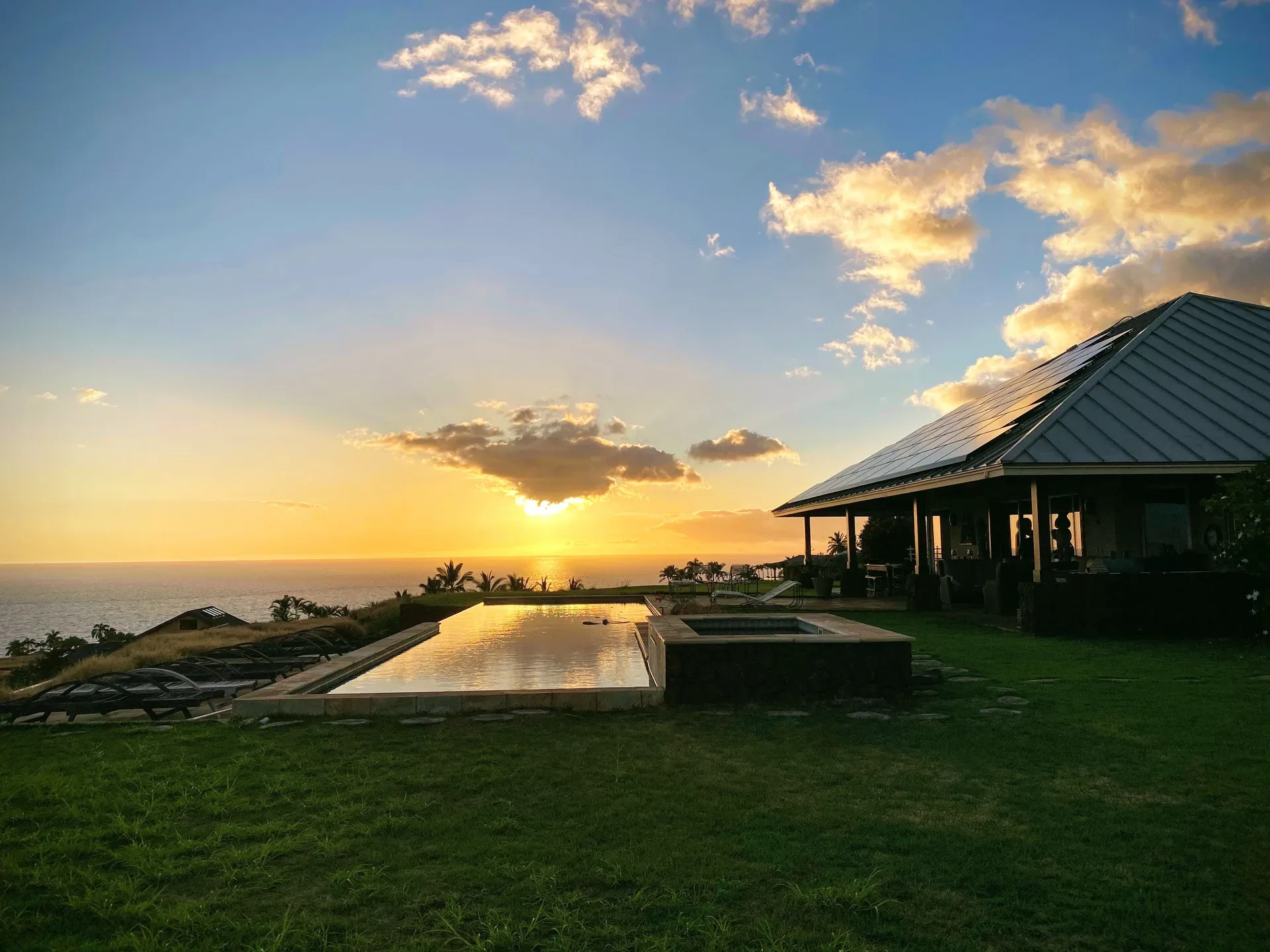
If you are buying a home on Hawaiʻi Island, one of the less glamorous—but genuinely important—questions is: Where does the wastewater go?
Depending on where you live, the answer may be a public or private sewer system, a conventional septic system, an aerobic treatment unit, or, particularly with an older property, a cesspool. On the Big Island, understanding the answer also requires understanding something else: what is under the house.
Hawaiʻi Island is geologically young and extraordinarily varied. One property may have deep, well-developed soil; another may sit on relatively recent lava with only a thin layer of soil; elsewhere, dense soil may drain slowly. Near the coast, groundwater and the ocean itself can impose additional constraints. Consequently, a wastewater system that works well on one property may be inappropriate—or impossible to approve—on another.
This is not a minor issue on Hawaiʻi Island. The Hawaiʻi Department of Health estimates that nearly 50,000 of the state’s approximately 88,000 cesspools are on Hawaiʻi Island. State law generally requires cesspools to be upgraded to an approved wastewater system or connected to sewer before January 1, 2050, subject to the exemptions contained in state law.
First, an Important Distinction: Treatment and Disposal Are Not the Same Thing
People often use “septic system” to describe almost any private wastewater system. Technically, that can obscure what is actually installed.
An onsite wastewater system usually has two separate jobs. First, wastewater must be treated. Second, the resulting effluent must be dispersed or disposed of safely.
A conventional septic tank is a treatment device. An aerobic treatment unit, or ATU, is a more sophisticated treatment device. An absorption trench, absorption bed, seepage pit, mound or approved subsurface irrigation system is a method of dispersing the effluent after treatment.
A cesspool is fundamentally different because it receives untreated household wastewater and allows the liquid portion to disperse into the surrounding ground. The Department of Health describes cesspools as disposal systems rather than wastewater treatment systems.
That distinction makes the rest much easier to understand.
Cesspools: Common on the Big Island, but Being Phased Out
A cesspool is essentially an underground excavation into which household wastewater flows. Solids accumulate, while liquid wastewater percolates through the bottom and sides into the surrounding ground.
Unlike a septic system, there is no separate tank providing primary treatment before the wastewater enters the soil. That is the environmental problem: untreated wastewater can introduce pathogens and nutrients into groundwater and, ultimately, streams and coastal waters.
Historically, Hawaiʻi Island’s volcanic geology made cesspools relatively easy to construct in many locations. Highly permeable ground could accept large quantities of wastewater. But ground that accepts wastewater easily is not necessarily ground that treats wastewater well . Very rapid movement through fractured lava or highly permeable material can allow wastewater to move downward before soil has had sufficient opportunity to filter it.
For a buyer, the important question therefore isn't simply whether an existing cesspool “works.” You also need to know what is documented, where it is located, whether there are known problems, and what options are likely to exist when it eventually has to be replaced.
The current statewide deadline is January 1, 2050, although certain circumstances can require earlier replacement. Regulations can change, so buyers and owners should verify current requirements with the Hawaiʻi Department of Health rather than relying on the rules that were in effect when they purchased the property.
Conventional Septic Systems
A conventional septic system begins with a septic tank. Household wastewater enters the tank, where heavier solids settle to form sludge and lighter materials such as fats and oils rise to form a scum layer. Anaerobic microorganisms break down some of the organic material. The liquid effluent then leaves the tank and goes to a separate disposal system.
The tank therefore performs primary treatment. The ground downstream of the tank performs another critical part of the job.
In a common configuration, effluent is distributed through an absorption trench or absorption bed. It moves gradually through suitable soil, where physical filtration and biological processes provide additional treatment before the water reaches groundwater.
What Kind of Soil Does a Conventional Absorption Field Need?
This is where Hawaiʻi Island geology matters enormously.
The ideal soil is neither extremely permeable nor nearly impermeable. It needs to accept wastewater at an appropriate rate while retaining it long enough for treatment to occur.
Under Hawaiʻi’s wastewater rules, conventional absorption systems are subject to limits involving soil percolation, groundwater, bedrock and other site conditions. In general, the system needs suitable soil that accepts effluent without allowing it to move so rapidly that groundwater or surface water could be contaminated.
In practical terms, reasonably permeable, sufficiently deep soil can be excellent for a conventional absorption field. Heavy or restrictive soils can drain too slowly. At the opposite extreme, coarse material, shallow soil over fractured lava, or other extremely permeable conditions may move wastewater too quickly to provide adequate treatment.
That last condition is particularly relevant on the Big Island.
A property can drain too well for a conventional system.
Absorption Trenches and Absorption Beds
These are variations on the same basic concept.
An absorption trench uses relatively narrow excavated trenches containing distribution piping and appropriate aggregate or approved components. An absorption bed distributes effluent across a broader excavated area. Both rely heavily on contact between effluent and suitable soil.
The suitability and required size of either system depend on the design wastewater flow, soil conditions, slope, available area and other site characteristics.
These systems are therefore most appropriate where there is adequate usable land, sufficient depth of suitable soil, appropriate permeability and adequate separation from groundwater, bedrock and other limiting conditions.
For a buyer looking at a large parcel with deep, suitable soil, finding room for an absorption field may be relatively straightforward. On a small lot built substantially over shallow lava, the situation can be very different.
Seepage Pits: Going Down Instead of Spreading Out
A seepage pit is sometimes confused with a cesspool because both are vertical structures in the ground. The crucial difference is what enters them.
A cesspool receives untreated household wastewater. A properly designed seepage pit receives effluent that has already passed through a treatment unit , such as a septic tank or other approved treatment system.
Instead of distributing effluent horizontally through relatively shallow trenches, a seepage pit disperses it through the sides of a deeper vertical excavation. This can reduce the amount of horizontal land required.
Hawaiʻi’s rules restrict where seepage pits are appropriate. Site slope, available land, underlying soil, depth to limiting layers, groundwater and the rate at which the receiving material accepts effluent all matter.
What Ground Does a Seepage Pit Need?
A seepage pit needs subsurface material capable of accepting the effluent at an appropriate rate without creating a threat to groundwater or surface water.
This is a good example of why the phrase “the lot has good drainage” tells a buyer almost nothing useful. The engineer needs to know what material exists at the actual disposal depth, how quickly it transmits water and what lies beneath it.
When the Big Island Has Too Little Suitable Soil: Soil-Replacement Systems
Here Hawaiʻi’s wastewater rules become particularly relevant to our island.
State rules provide for soil-replacement systems for certain sites where upper soil conditions are unsuitable—including extremely rapid percolation, certain slow-percolating conditions and fractured lava.
In simplified terms, suitable material is introduced so that wastewater has an engineered soil environment through which to pass instead of being discharged directly into inappropriate native material.
This is an important concept for Big Island buyers. Bare or fractured lava does not automatically mean that an onsite wastewater system cannot be built. It can, however, change the engineering solution, the footprint and potentially the cost.
It also illustrates why you cannot determine the appropriate wastewater system simply by looking at the surface of a property.
Aerobic Treatment Units: More Treatment Before the Water Reaches the Ground
An Aerobic Treatment Unit (ATU) is essentially a small biological wastewater treatment system.
Unlike a conventional septic tank, which primarily relies on settling and anaerobic processes, an ATU introduces oxygen so aerobic microorganisms can break down organic material more effectively. The result is a higher-quality effluent before it reaches the disposal system.
Hawaiʻi requires approved household aerobic units to meet specified treatment standards. They also require ongoing maintenance. Owners are required to maintain an active service contract, and the system’s equipment, aeration, sludge accumulation and operation must be periodically inspected and maintained.
This is an important ownership distinction: an ATU has mechanical components and ongoing service requirements that a simple conventional septic tank does not.
What Soil Does an ATU Need?
This question has an interesting answer: the ATU itself doesn't depend upon the native soil for treatment because treatment takes place inside the unit. The disposal system connected to it does.
An ATU can discharge to an approved soil absorption system, sand filter, subsurface irrigation system or another approved disposal system. Therefore, the ground conditions determine what must happen after the ATU.
That flexibility can make advanced treatment useful where a conventional septic system alone is inappropriate because of groundwater, environmental sensitivity or other site conditions.
Again, however, advanced treatment does not make geology irrelevant. The treated water still has to go somewhere.
Nitrogen-Reducing Aerobic Systems
Some advanced treatment units go beyond conventional aerobic treatment and reduce nitrogen.
That matters because nitrogen from wastewater can migrate through groundwater and contribute to nutrient loading in coastal waters. Hawaiʻi has additional performance requirements for household aerobic systems in circumstances where effluent is discharged directly to groundwater.
For coastal and environmentally sensitive properties, the quality of the treated effluent can therefore become as important as the ability of the ground to accept it.
Sand Filters
A sand filter adds an engineered treatment medium when additional treatment is appropriate. Effluent passes through carefully selected sand, where filtration and biological activity improve water quality before final dispersal.
The significant point for a property owner is that engineered media can sometimes compensate for limitations of the natural site. Rather than expecting unsuitable native soil to perform a job it cannot perform adequately, the system creates a controlled treatment environment.
Sand filters and other less-conventional systems are subject to applicable DOH approval and design requirements.
Elevated Mound Systems
Sometimes the problem isn't permeability at all. It is vertical separation.
If groundwater is too close to the surface, or another limiting condition prevents sufficient separation beneath a conventional absorption system, an engineer may need to move the disposal area upward rather than downward.
An elevated mound places engineered soil or other approved material above the natural grade and distributes treated wastewater through that raised area. Hawaiʻi reviews elevated mound systems under its applicable wastewater rules and approval process.
The ground condition that can lead to a mound is therefore essentially the opposite of what many people associate with septic problems: there isn't enough usable vertical separation between the disposal area and groundwater or another limiting layer.
Subsurface Drip Irrigation
Treated wastewater can also, when approved, be dispersed through subsurface irrigation or drip systems.
Instead of concentrating effluent in a conventional absorption bed, small amounts of appropriately treated wastewater can be distributed through a network of tubing below the surface. This approach can be useful in particular site configurations, but it requires appropriate pretreatment and engineering; it is not simply a substitute for a leach field that can be installed anywhere.
As with the other systems, soil, slope, groundwater, vegetation, available area and the quality of the treated effluent all matter.
Passive Advanced Systems and Newer Technologies
Hawaiʻi DOH recognizes a broader range of approved individual wastewater technologies than the familiar septic tank and ATU. Its current information includes passive aerobic systems used with septic tanks and other technologies that have gone through DOH review.
The state also recognizes composting and incinerating toilets. These require an important qualification: they address toilet waste, while wastewater from showers, sinks, kitchens and other household uses still requires approved treatment and disposal.
This area continues to evolve, which is one reason a property owner considering a cesspool conversion should not assume that the only possible choice is a conventional septic tank and leach field.
The Goldilocks Problem: Soil Can Drain Too Slowly—or Too Quickly
Perhaps the most useful way to understand onsite wastewater on Hawaiʻi Island is this:
The best ground for wastewater disposal is not simply the ground that drains fastest.
Soil has two jobs. It must accept the effluent, but it also acts as a treatment medium.
If the soil is too dense, water does not move through it quickly enough and the disposal system can become saturated. If the ground is extremely permeable, water can move through too rapidly, reducing treatment and potentially threatening groundwater.
Hawaiʻi’s wastewater rules define suitable soil in terms of this treatment function: it must act as an effective filter before effluent reaches highly permeable formations, bedrock or groundwater.
That definition is particularly meaningful on a volcanic island.
Why a Percolation Test Isn't the Whole Answer
You may hear someone say, “The property passed a perc test.”
That is useful information, but it isn't enough by itself to determine the appropriate wastewater system.
A proper site evaluation considers the soil profile as well as percolation. Among other things, the engineer evaluates soil characteristics, bedrock, groundwater or seasonal saturation and other limiting conditions. The important conditions are those that exist at the location and depth where the wastewater system will actually operate.
In other words, the engineer isn't simply asking how fast water disappears.
The more important questions are:
Where will that water go? What will happen to it on the way? And what could it reach?
Maintenance Matters, Too
Even a properly designed wastewater system requires appropriate maintenance.
The Hawaiʻi Department of Health recommends that individual wastewater systems be inspected periodically—generally about every five years—to confirm continued operation. Cesspools and septic tanks need pumping as necessary to prevent solids accumulation, overflow and backups.
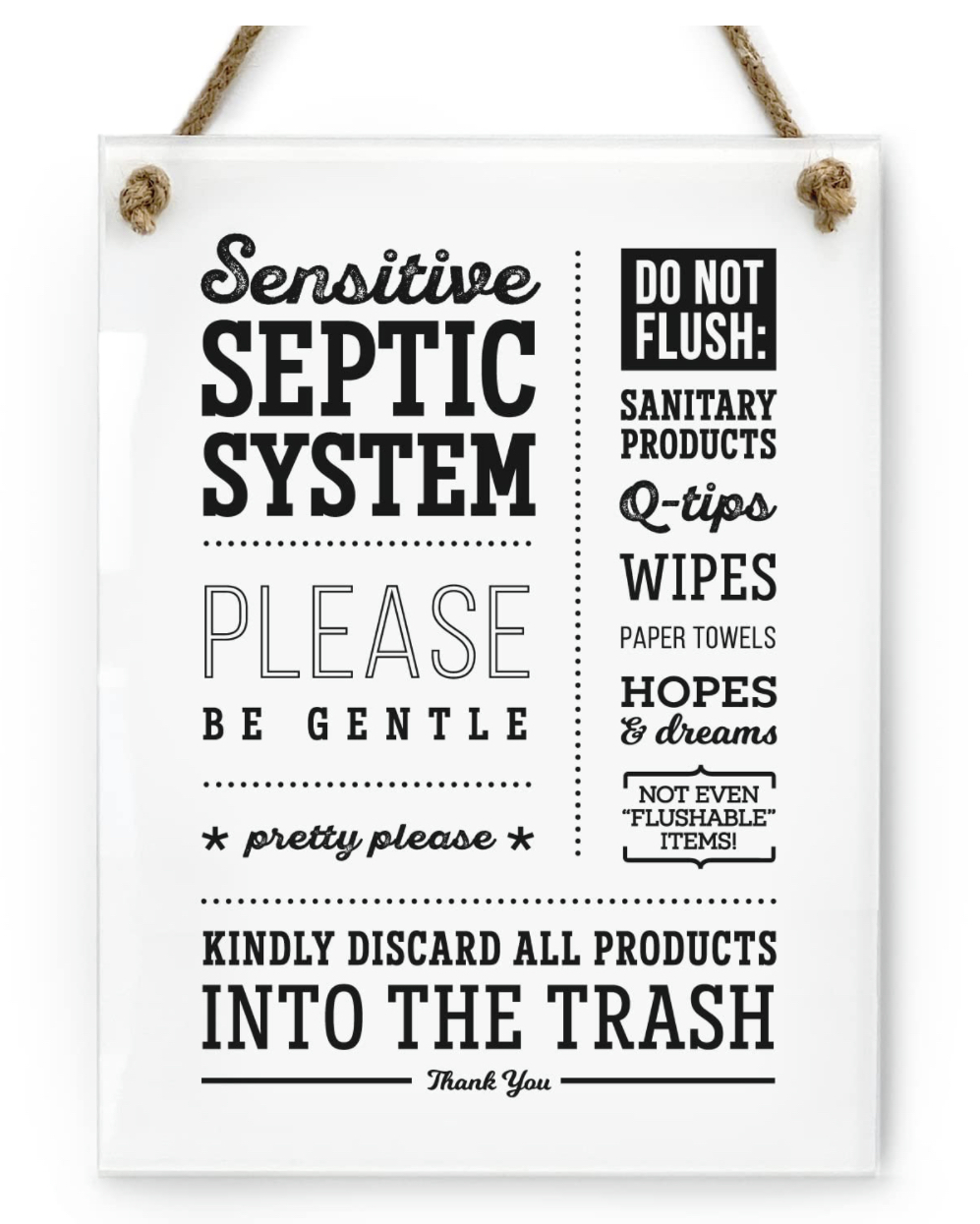
ATUs are different. They contain equipment that requires regular inspection and maintenance, and Hawaiʻi requires an active service contract for household aerobic units. Pumps, aerators and other mechanical components will not last forever.
For a buyer, maintenance history can therefore be an important part of due diligence. Available pumping records, service records and inspection information can help establish how the existing system has been maintained.
What This Means When Buying a Hawaiʻi Island Property
For a buyer, “septic” should be the beginning of the inquiry rather than the end of it.
Find out what system is actually installed. Ask for available DOH records, approved plans, permits, as-built information, pumping records and maintenance records. With an ATU, verify the required service arrangement and service history. With an older property, determine whether the system described by the seller or listing information is actually what exists in the ground.
If the property has a cesspool, understand that the cesspool itself represents a future property issue even if it is functioning today. Hawaiʻi law generally requires conversion or sewer connection by 2050, and the practical difficulty and cost of that conversion will depend on the individual site.
DOH currently advises homeowners beginning a cesspool conversion or replacing a failing onsite system to start by hiring a Hawaiʻi-licensed civil engineer to develop an appropriate Individual Wastewater System design.
That makes the land itself part of the due diligence.
A large lot with deep, suitable soil presents a very different conversion problem from a small coastal lot with shallow groundwater. A house sitting on fractured lava presents different engineering questions from one sitting on deep volcanic soil. A steep parcel may require a different disposal strategy from a nearly level one.
Don't Assume a Cesspool Conversion Means “Install a Septic Tank”
This may be the most important takeaway.
When Hawaiʻi’s cesspools are converted, there will not be one universal replacement system.
For one property, the appropriate solution may be a conventional septic tank and absorption field. Another may require soil replacement because of fractured lava. Another may be better suited to advanced aerobic treatment. A property with groundwater constraints may need a mound or another engineered dispersal method. A difficult lot may require a combination of treatment and disposal technologies.
The correct system is determined by the site, the applicable regulations and the engineer’s design—not by what happens to be installed next door.
A Useful Wastewater Vocabulary for Big Island Buyers
- Cesspool: Receives untreated household wastewater and allows the liquid to disperse into surrounding ground. It is not equivalent to a septic system.
- Septic tank: Provides primary treatment by settling solids and using anaerobic biological processes.
- ATU (Aerobic Treatment Unit): Uses aeration and biological processes to provide a higher level of wastewater treatment.
- Absorption trench or bed: A relatively shallow subsurface disposal system that distributes treated effluent through suitable soil.
- Seepage pit: A deeper vertical disposal structure receiving previously treated effluent.
- Soil-replacement system: Uses suitable material to create an appropriate absorption environment where native conditions—including fractured lava—are unsuitable.
- Sand filter: Uses engineered sand as an additional treatment medium.
- Elevated mound: Creates additional vertical treatment/disposal depth above natural grade where groundwater or another limiting condition is too close to the disposal area.
- Subsurface drip irrigation: Distributes appropriately treated effluent through buried tubing over a designed area.
- Percolation rate: A measurement of how rapidly water moves through soil. Faster is not automatically better.
The Bottom Line
Wastewater is one of those subjects that becomes much more interesting once you understand Hawaiʻi Island geology.
Our young volcanic landscape is part of what makes this island extraordinary, but it also means there is no single “Big Island soil.” Conditions can change dramatically from one part of the island to another—and sometimes within a surprisingly short distance on the same parcel.
That is why the right question when looking at a Hawaiʻi Island property isn't simply:
“Does it have septic?”
Better questions are:
What wastewater treatment system does it have? How is the effluent disposed of? What are the soil and subsurface conditions? Is the existing system documented and functioning properly? And, if it has a cesspool, what is likely to be required to replace it?
Those questions can reveal considerably more about a property—and its future costs—than the single word “septic” in a real estate listing.
A note for buyers and property owners
This article provides general information about Hawaiʻi Island real estate and wastewater systems. It is not engineering, environmental or legal advice. Wastewater requirements are property-specific, and regulations and approved technologies can change. Buyers and property owners should consult the Hawaiʻi Department of Health and an appropriately licensed Hawaiʻi civil engineer when evaluating a particular property or wastewater system.
Buying a property with a cesspool or unfamiliar wastewater system?
Wastewater is one of several Hawaiʻi Island-specific issues worth investigating during due diligence. I can help you identify the questions to ask and the appropriate professionals to consult before you buy.
Start the conversation
With aloha,
Carol Porter
REALTOR® · RS-87584 · HI · Better Homes and Gardens Real Estate Island Lifestyle
Next step
Questions about your own search?
Every situation is different, and the details change the answer. Tell me what you’re considering and I’ll give you an honest read.