Part of the Series: Technology, Innovation, Stewardship and the Future of Hawaiʻi Island
Richard Smart:
Broadway, Parker Ranch, and
the Future of Waimea
 By Carol Porter, REALTOR® · November 11, 2026
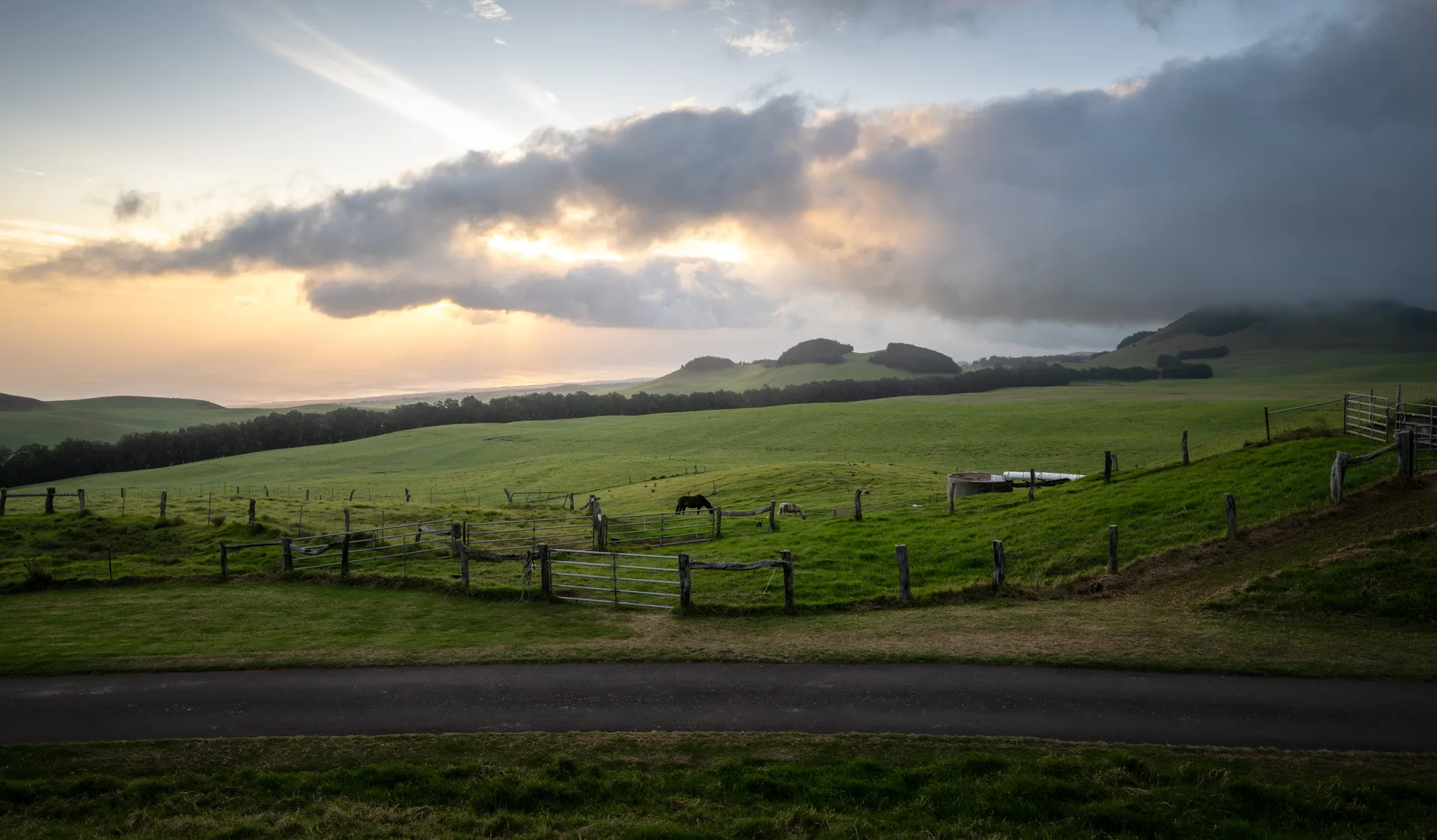
Richard Smart was born into one of Hawaiʻi’s great ranching families, but for much of his early adult life his interests lay on a very different stage. He sang in nightclubs, performed on Broadway, and traveled in the theatrical circles of New York, California, and Europe. Then he returned to Waimea, where his decisions about an inherited cattle ranch would influence not only the business itself, but also the development of the Kohala Coast and the institutions of the town he called home.
He was a sixth-generation descendant of the Parker family and the last private owner of Parker Ranch. His life encompasses an unusual combination of performance, land development, ranch management, community planning, and philanthropy. What interests me most is how these different pursuits intersected—and how much of his influence can still be seen in Waimea today.
An Heir Who Preferred the Stage
Richard Palmer Kaleioku Smart was born in Honolulu on May 21, 1913. His mother, Annie Thelma Kahiluonapuaʻapiʻilani Parker Smart, died in San Francisco in November 1914; his father, Henry Gaillard Smart, died in November 1915. Richard inherited the Parker Ranch interest as a very young child and was raised principally by his grandmother, Elizabeth Jane Lanakila Dowsett, remembered as “Aunt Tootsie.” Much of his upbringing took place away from Waimea, including time in California.
The ranch did not stand still while its heir grew up. Alfred Wellington Carter, and later his son Hartwell, provided the continuity of management that allowed Parker Ranch to expand through the early twentieth century. At its historical peak, its holdings and leases encompassed more than 500,000 acres; under A. W. Carter, the ranch’s purebred Hereford herd exceeded 30,000 head by 1930. These figures reflect the scale of the operation built during the Carter era, not innovations Smart personally introduced later. When Smart reached the ownership milestone recorded by Parker Ranch in 1933, at age 20, he chose to keep experienced managers in charge while he pursued a performing career.
This was no occasional hobby. Biographical accounts trace his interest in theatre to his school years in Los Gatos, California. In 1940, Smart appeared on Broadway in Two for the Show, a revue whose sketches were directed by Joshua Logan. He later played Jeff Calhoun as a replacement in the original run of Bloomer Girl, then returned to the role in the 1947 Broadway revival opposite Nanette Fabray. His other Broadway credits included All for Love; his 1992 New York Times obituary also names The Merry Widow. His cabaret career took him to such venues as the Coconut Grove in Los Angeles, the Monte Carlo in New York, and Le Lido in Paris. Theatre was a sustained professional career, not an interlude before ranching.
That part of his life would eventually find an unexpected expression in a small Hawaiʻi ranching town.
Returning to a Changing Ranch
Smart returned to Waimea as his permanent home around 1959–1960, moving from a life centered on performance toward more active responsibility for Parker Ranch. The enterprise he inherited was vast, but size did not insulate cattle ranching from changing markets, costs, and operating demands.
Under his ownership, and with the work of ranch managers and paniolo, Parker Ranch pursued new approaches to cattle breeding, irrigation, pasture management, feed supplementation, and feedlot operations. The Hawaiʻi Cattlemen’s Council credits Smart with encouraging these changes. The distinction matters: ranch innovation was the work of many people, not a set of techniques invented single-handedly by the owner.
A contemporary outside observer noticed Smart’s relationship with the people around him. Novelist James A. Michener, quoted in a 1983 People magazine profile, remarked on the respect Smart received locally, particularly from “the native Hawaiians who work for him.”
The ranch also diversified. Visitor operations introduced the public to ranch history. Commercial property in Waimea provided another use for land. And some of the dry coastal tracts that had limited value for cattle became central to a very different part of Hawaiʻi Island’s economy.
The Land Decisions Behind the Kohala Coast Resorts
One of Smart’s consequential decisions involved Parker Ranch’s coastal holdings. In the early 1960s, a combination of leasehold and subsequent land transactions involving Laurance S. Rockefeller helped make the development of Mauna Kea Beach Hotel possible. The hotel opened at Kaunaʻoa Bay in 1965 and became a landmark in the emergence of the Kohala Coast resort industry. The legal history was not simply a one-time outright sale: distinct parcels and later residential interests were held or conveyed under different arrangements.
That distinction remains familiar to people who have owned property at Mauna Kea Resort. The established Fairways North and Fairways South neighborhoods initially included leasehold properties, and some owners subsequently acquired the fee interest. The history of a resort development and the title history of an individual home are related, but they are not interchangeable.
Farther south, Parker Ranch sold approximately 25,500 acres in the Waikoloa area to Boise Cascade in the late 1960s. Boise Cascade established the residential community that became Waikoloa Village. A later transaction brought substantial Waikoloa holdings under Ron Boeddeker’s Transcontinental interests, which played an important role in subsequent development, including the coastal resort. The Village and Waikoloa Beach Resort have distinct histories and should not be confused with one another.
Smart expressed the economic contrast memorably in a 1983 People interview, as quoted in Waikoloa Beach Resort’s historical account: “It is land the cows don’t like but the tourists love — hot and barren.” His remark captures the difference between grazing value and prospective resort use, even though the legal history of the coastal parcels involved distinct transactions.
These sales and leases helped Parker Ranch finance continued operations and gave other developers an opportunity to create hotels, residential communities, and associated infrastructure. The gains came with tradeoffs. Accounts of the Waikoloa transactions also describe the loss of coastal places where ranch employees and families had long gathered. That part of the story matters alongside the economic benefits.
Smart was not the sole creator of the resort coast. But without his decisions about land formerly held by Parker Ranch, the subsequent history would have been different.
Kahilu Theatre: Bringing the Stage Home
If the coastal transactions show Smart thinking about the economic future of ranch lands, Kahilu Theatre shows something more personal. He wanted Waimea to have a place for serious performing arts—not simply an occasional touring production in an improvised space, but an established theatre with the facilities to present a substantial range of work.
Construction began in 1979, and Kahilu Theatre opened on February 6, 1981, with the Noël Coward revue Oh Coward!, starring Smart and Honolulu actress Wisa d’Orso. Built at a reported cost of approximately $1.5 million, the theatre seated about 490 people. Its name honors his mother, Thelma Kahiluonapuaʻapiʻilani Parker Smart. It brought professional stage productions to a community far removed from the entertainment centers where Smart had spent his earlier career.
Smart continued performing and directing at Kahilu, including productions of The Man Who Came to Dinner, Last of the Red Hot Lovers, and Cactus Flower. He shared the stage there with his earlier Broadway colleague Nanette Fabray. In 1989, he appeared in On Golden Pond; this was a late performance, although his later one-man musical Richard Smart Remembers also appears in his obituary. Kahilu remained associated with Parker Ranch after his death, and in 2001 the Kahilu Theatre Foundation obtained a long-term lease to operate it. Today Kahilu presents music, drama, dance, visual arts, and educational programming, sustained by many people beyond its founder.
Waimea and Kohala on Film, Around 1986
An archival film offers a glimpse of Smart in the community he helped shape. It includes Smart and Kahilu Theatre’s Virginia Pfaff, along with other Waimea residents and artists, before moving beyond the town into the wider Kohala district. It is not a film solely about Smart; that is part of its interest. It places him among people and places that were part of everyday life on the island about four decades ago.
If the embedded player is unavailable, watch the Kohala film on YouTube.
Puʻuʻōpelu: A Ranch House with a Cosmopolitan Interior
Smart’s home at Puʻuʻōpelu is another revealing part of the story. The Victorian-era Parker family residence had been associated with the ranch long before his return. Around 1960, he transformed its interiors on a scale that reflected his years in theatrical and artistic circles.
He created a formal dining room and replaced an earlier wooden living room with a large concrete-and-steel drawing room measuring about 55 by 35 feet, with ceilings rising to 16 feet. The room included skylights, chandeliers, French-influenced furnishings, an Italian marble fireplace, and a piano. The house held paintings, antiques, decorative objects, family mementos, and souvenirs of a wide-ranging life. His collection included European paintings and works of decorative art; the rooms and grounds became a distinctive setting within a working ranch landscape.
I visited Puʻuʻōpelu years ago, and what stayed with me was the contrast. The formal side of the house was elegant and French-influenced. Yet when I went outside behind the kitchen, the building still felt like a ranch house. In a way, it reminded me of the old false-front buildings in Nevada mining towns, where the street-facing architecture suggested something quite different from the structure behind it. That is my impression of the place, not a claim that Smart literally built a false façade.
In 1986, Smart also had Mana Hale, an ancestral Parker family residence, carefully moved and reassembled on the Puʻuʻōpelu grounds. The juxtaposition of his formal drawing rooms and an older ranch home said something about the varied histories he chose to keep nearby.
There is an interesting contrast between this private world and his later plans for Waimea. His home reflected cosmopolitan tastes; his ideas for the town emphasized preserving its ranching identity. I would not assume his tastes changed. The more convincing distinction is between a personal residence and the character of an entire community.
A Plan for Waimea That Looked Beyond His Lifetime
In 1985 Smart advanced the Parker Ranch 2020 Plan, a long-range effort to shape Waimea’s growth rather than leave it to disconnected projects. Its ambitions included housing, schools, commercial activity, roads, utilities, parks, trails, open space, and a recognizable town center.
One of the plan’s explicit objectives was to reinforce architecture associated with Waimea’s ranching heritage. Another was to protect its rural setting while making room for the needs of residents. The State Land Use Commission’s 1987 approval documents these intentions; later county actions and the Waimea Town Center Plan carried elements of the vision forward.
In 1992, Hawaiʻi County adopted an ordinance rezoning roughly 580 acres associated with the Parker Ranch 2020 Plan, an important regulatory step toward its eventual implementation—not evidence that the entire envisioned community had already been built.
Not everything was built on the original schedule, and the plan should not be represented as a fully realized masterwork. Subsequent planning reports document neighborhoods and infrastructure improvements alongside proposals that were delayed, revised, or left incomplete. Nevertheless, it was significant that a large private landowner approached the future of Waimea as a community-planning question, not merely as a sequence of land sales.
That history helps explain some of the tensions visible in modern Waimea: the desire to maintain open pasture and small-town character alongside the practical need for housing, services, and infrastructure. For a more contemporary discussion of life and property ownership here, see Living in Waimea: What Buyers Should Know.
His Family, His Companions, and the Estate He Left
The public record of Smart’s life is richer than many earlier obituaries suggested. He married actress Patricia Valerie Havens-Monteagle in 1936; they divorced in 1944 and had two sons, Antony and Gilliard. The Lei Pua ʻAla Queer Histories of Hawaiʻi Project, drawing in part on the authorized biography written by William C. Bergin and Dexter Keaweʻehu Vredenburg, also documents Smart’s life as a gay man and his longtime companions Charles Gregory and Stephen Greenough. Both companions are memorialized with him at Puʻuʻōpelu.
This is not an incidental correction to his biography. The theatre, family, friendships, relationships, and community were all parts of his life. A credible historical portrait should acknowledge them without treating his private life as an explanation for decisions that the evidence does not connect.
The disposition of Parker Ranch after his death also deserves careful treatment. Smart chose a charitable-benefit arrangement rather than leaving the ranch outright to his sons. His sons challenged the estate in litigation begun in 1993; a 1999 Honolulu Star-Bulletin account says the dispute ended in a private settlement. The settlement terms were not publicly established in that report.
His estate plan was deliberate, but its implementation was not without conflict.
A Ranch That Continues to Benefit Waimea
Smart died on November 12, 1992, at age 79. Through the Parker Ranch Foundation Trust and related estate arrangements, the ranch became an enduring source of support for designated Waimea institutions and community needs.
The trust’s four current beneficiaries are Queen’s North Hawaiʻi Community Hospital, Hawaiʻi Preparatory Academy, Parker School, and Hawaiʻi Community Foundation, through its Richard Smart Fund. It is important to distinguish the trust’s payments to the beneficiaries from the grants those beneficiaries subsequently make or the programs they operate.
Some historical planning accounts identify a fifth intended beneficiary, Lucy Henriques Medical Center, separately from North Hawaiʻi Community Hospital. The two institutions merged in 1999; the trust’s subsequent reports and its current beneficiary list identify four recipients. The distinction helps explain why historical references occasionally give different counts.
The Parker Ranch Foundation Trust’s 2019 Annual Report records $36,638,737 in cumulative cash distributions paid to beneficiaries through December 31, 2019. Separately, Hawaiʻi Community Foundation reports that its Richard Smart Fund distributed more than $8.65 million in grants between 2001 and 2025, and awarded 29 grants totaling $500,000 in June 2026. These are different measures, covering different flows of money and time periods.
One earlier distribution illustrates how the trust’s support took physical form. In 2005, the Parker Ranch Foundation Trust announced a package of land and cash worth approximately $7.8 million. It included land for North Hawaiʻi Community Hospital valued at about $3.7 million, as well as land-and-cash allocations of approximately $1.2 million each to Hawaiʻi Preparatory Academy and Parker School. Those are 2005 transaction figures, separate from the later cumulative-distribution and Richard Smart Fund grant totals described above.
The arrangement has faced financial pressures and disputes over governance since Smart’s death. Successive trustees, ranch employees, organizational leaders, and nonprofit institutions have had to manage the responsibilities that accompanied his gift. That does not diminish what he established; it makes the continuing work of stewardship visible.
Pukalani Stables: A Living Heritage
Pukalani Stables offers another view of how Parker Ranch history remains part of Waimea’s daily life. The stables were designed and built in 1909 under A. W. Carter, long before Smart returned to direct ranch affairs. Their history includes horse breeding, training, blacksmithing, and the working routines of the ranch’s paniolo.
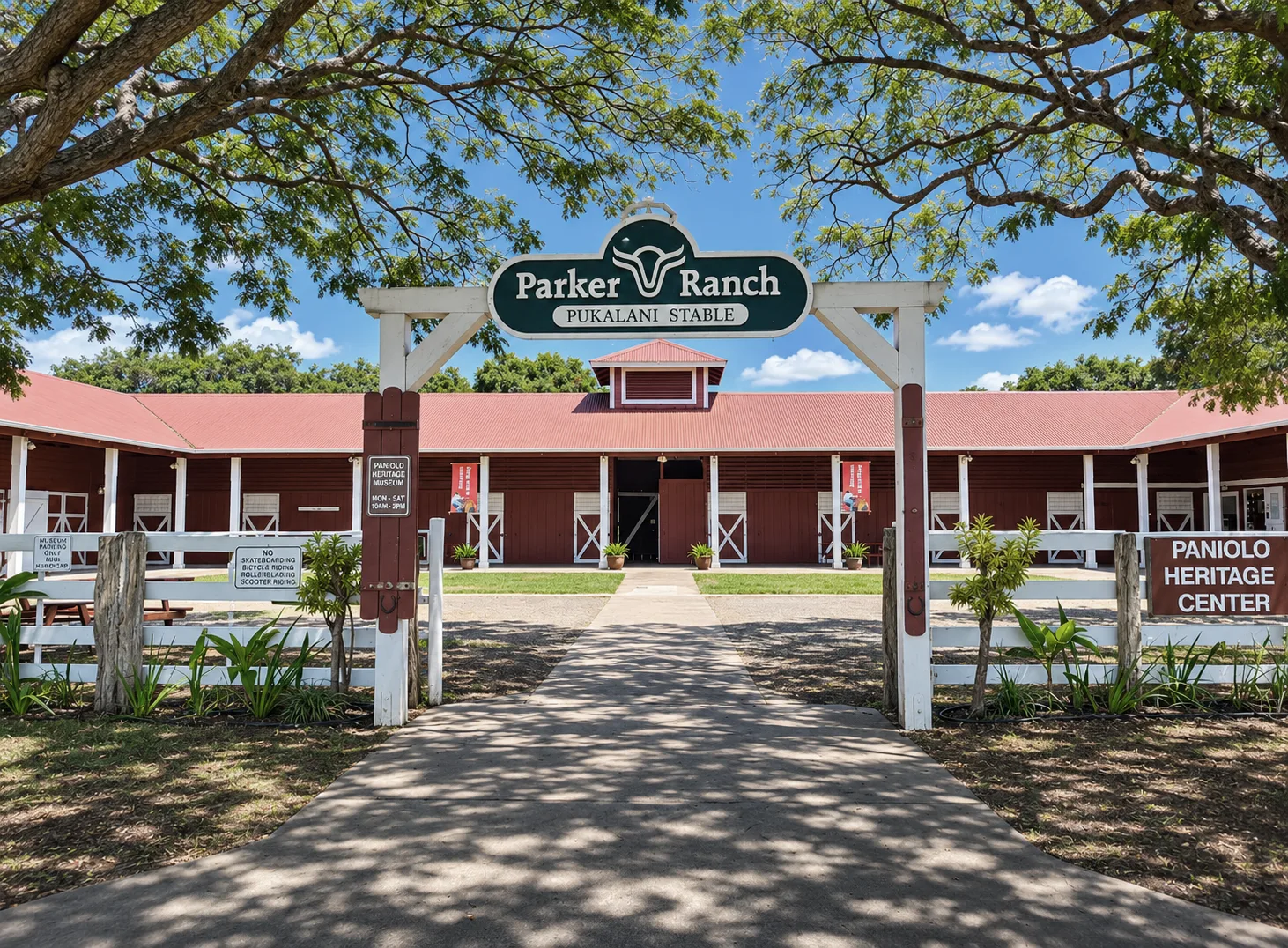
Today the site is home to the Paniolo Heritage Center, operated by the Paniolo Preservation Society. It also houses the Nā Wahine Holo Lio Paʻu Museum and provides a venue for the Wednesday Pukalani Midweek Market and Saturday Kamuela Farmers Market. Parker Ranch announced plans to donate the historic stables to the preservation society in 2022.
The stables are not a personal creation of Richard Smart. Their place in this profile is different: they represent the ranching traditions that preceded him and continue beyond him, sustained by people and organizations committed to keeping that history accessible.
What Richard Smart Left to Hawaiʻi Island
Richard Smart did not create Parker Ranch, nor did he single-handedly build the resorts, schools, hospital, or community that developed around its lands. Those achievements involve generations of paniolo, managers, builders, educators, healthcare professionals, planners, trustees, and residents.
His significance lies in the choices available to him—and in the particular choices he made. He supported changes to a major ranching enterprise, made land available for new economic uses, brought a professional theatre to Waimea, advanced a plan for the town’s future, and arranged for a substantial part of his wealth to support the community after his death.
His life also resists a simple label. The performer who filled his home with art and French-influenced furnishings was the same man whose planning vision called for architecture that respected Waimea’s ranching character. His charitable intentions produced measurable benefits, but also a complicated institutional history. Both sides belong in the story.
For me, that is what makes Smart an especially relevant subject in this series about technology, innovation, stewardship, and the future of Hawaiʻi Island. His legacy is not only something to remember. It raises a question that remains relevant whenever land, wealth, and development intersect: How can decisions about property serve a community beyond the lifetime of the person making them?
Richard Smart is part of my series, Technology, Innovation, Stewardship and the Future of Hawaiʻi Island. For additional historical and community context, see my Waimea area guide, Waikoloa Village article, and Mauna Kea Resort guide.
Next step
Questions about your own search?
Every situation is different, and the details change the answer. Tell me what you’re considering and I’ll give you an honest read.