
Lifestyle on Hawaiʻi Island · Community guide
Hilo: Where Rainforest Meets the Bay
Hawaiʻi Island’s county seat offers historic neighborhoods, a lively downtown, cultural traditions, and a distinctly windward way of life.
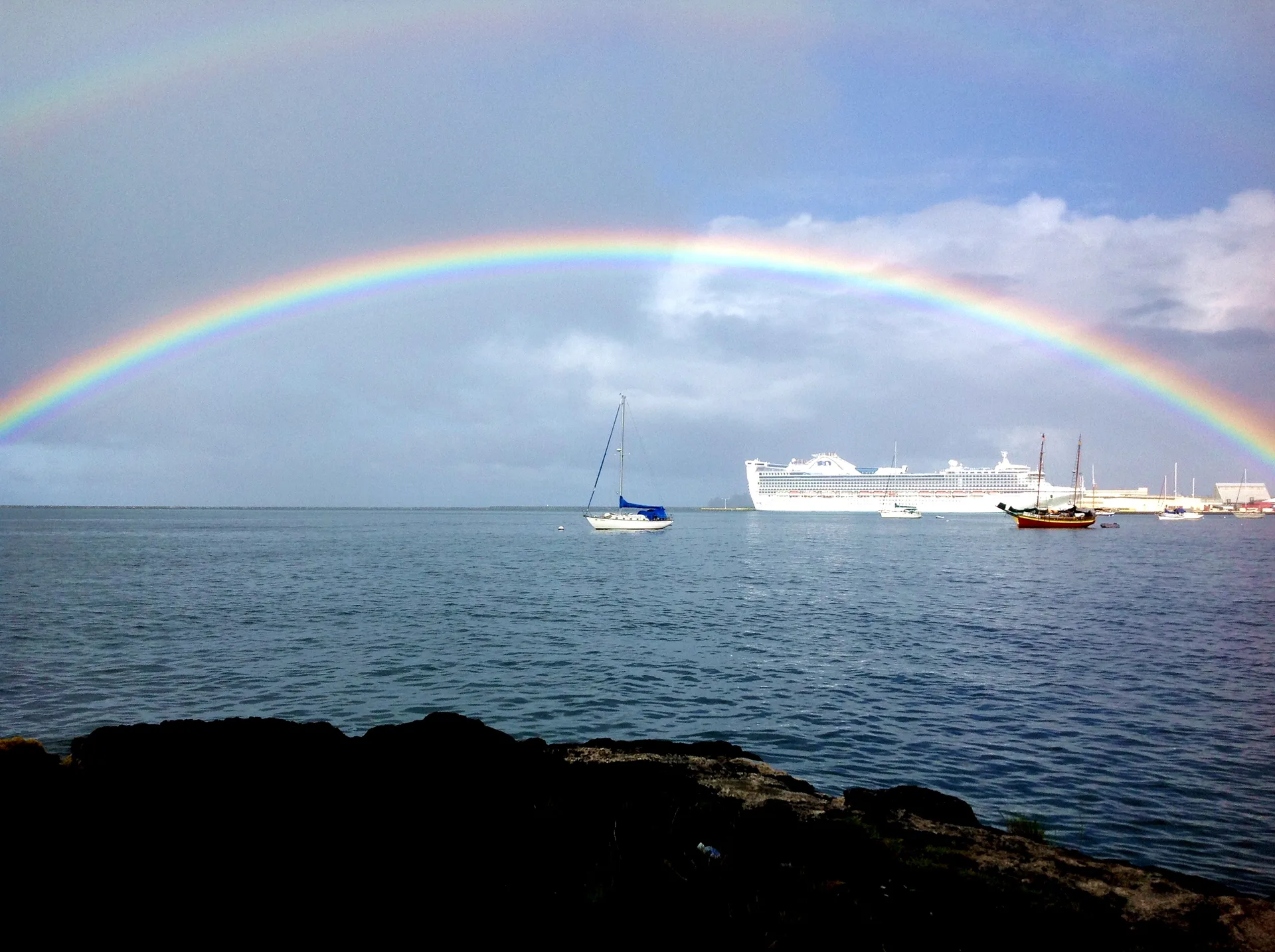
When buyers ask me about living on Hawaiʻi Island’s greener, more traditional side, Hilo is one of the first places I suggest exploring.
On the windward coast, overlooking Hilo Bay, Hilo is the island’s largest population center and the seat of Hawaiʻi County government. It is a working town with a history that reaches well beyond tourism, a university, a major hospital, established neighborhoods, and a downtown that still feels like a downtown.
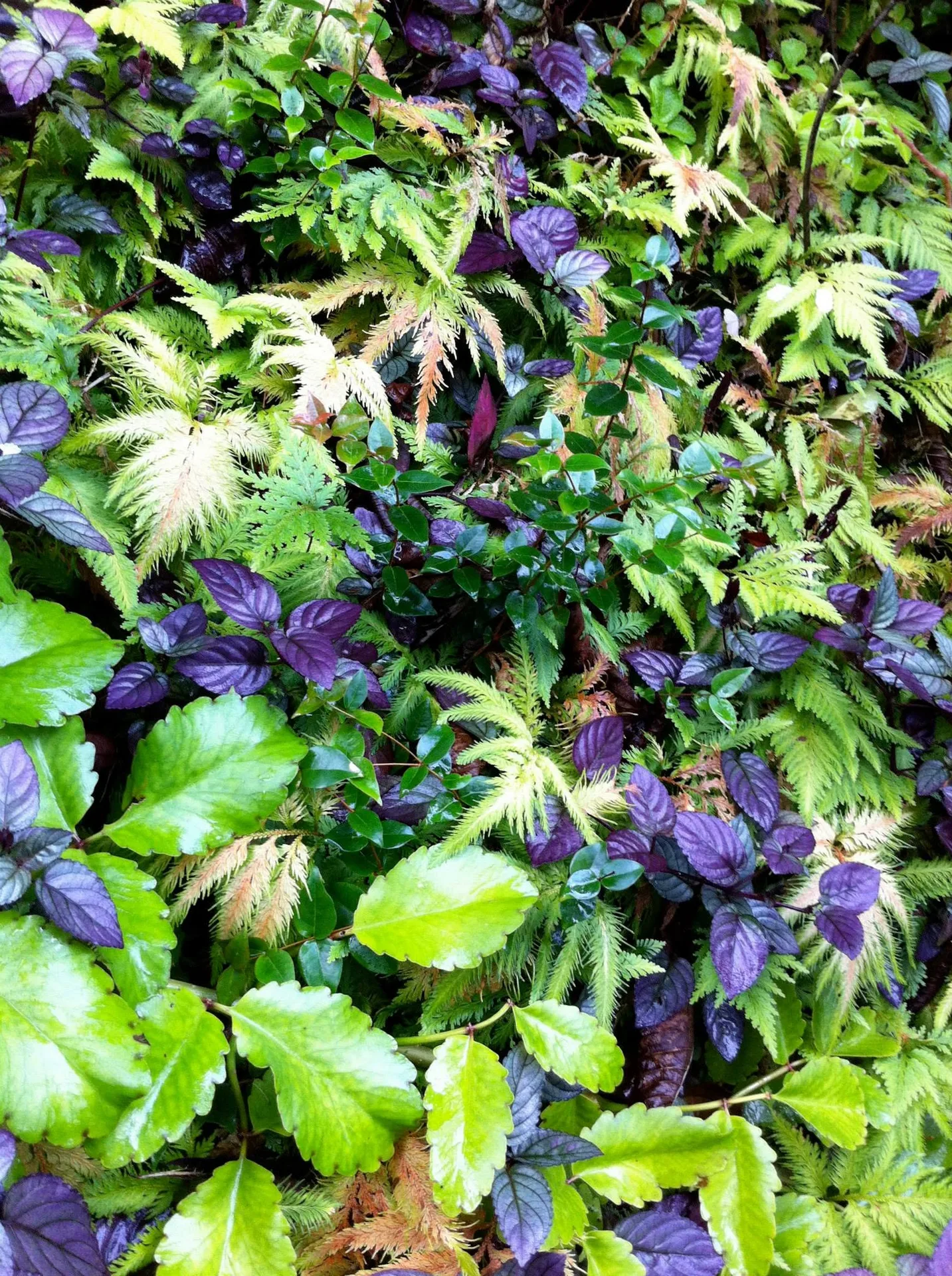
It is also famously rainy. Hilo receives about 130 inches of rainfall a year at the airport in a typical year, although rainfall varies considerably by location and elevation. The result is an extraordinary green landscape: enormous trees, flowering gardens, waterfalls, and tropical vegetation that seems to grow almost before your eyes. For how that rainfall fits into the island’s wider weather picture, my journal article on Hawaiʻi Island’s climate zones explains the wet side and the dry side in practice.
If the Kohala Coast is known for sunshine and resorts, Hilo offers a different experience of island life.
Downtown Hilo: A Town With Its Own Identity
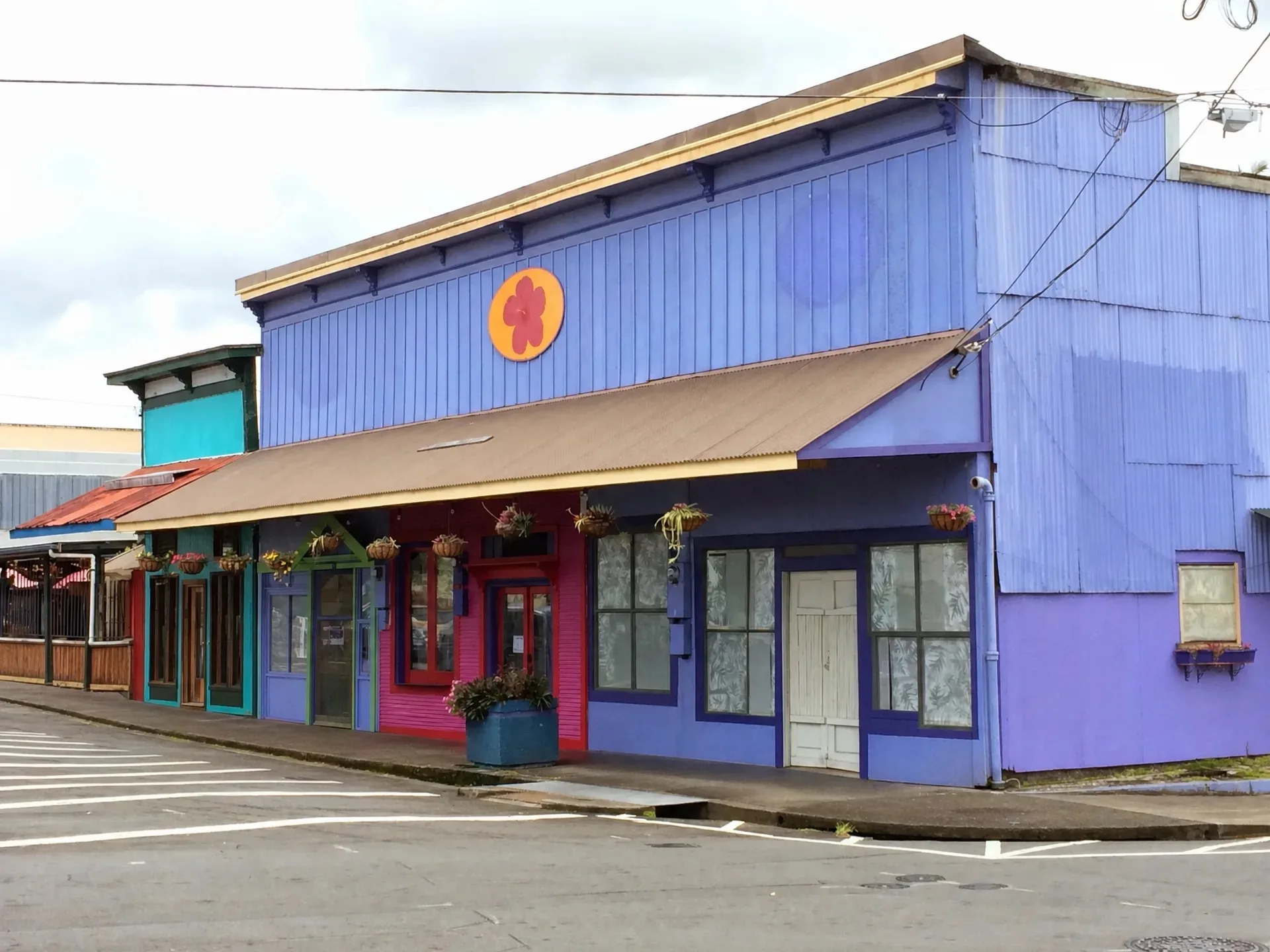
Downtown Hilo is one of my favorite examples of a Hawaiian town that has retained its character.
Along Kamehameha Avenue and the surrounding streets, historic commercial buildings house independent shops, galleries, restaurants, cafés, and businesses serving local residents. The Hilo Farmers Market brings together growers, food vendors, artisans, and shoppers, with big market days on Wednesdays and Saturdays, while the nearby bayfront offers broad views across the water.
The Pacific Tsunami Museum tells an essential part of Hilo’s history, including the devastating tsunamis of 1946 and 1960 that profoundly changed the town and its relationship with the ocean.
The Lyman Museum, located a short distance from the bayfront, explores Hawaiʻi’s natural and cultural history. Farther inland, the ʻImiloa Astronomy Center combines astronomy, Hawaiian navigation traditions, and the cultural significance of Maunakea.
Hilo is also home to the University of Hawaiʻi at Hilo and Hawaiʻi Community College, which contribute to the town’s educational and cultural life.
Unlike a resort community, Hilo is a place where government, education, healthcare, commerce, and family life intersect every day.
Hilo Bay: Historic Hawaiʻi on the Waterfront
Hilo Bay is one of the defining features of the town. Its broad curve opens toward the Pacific, with Maunakea rising majestically above the town and the green coastline of Hāmākua stretching northwest. Together, they create one of Hawaiʻi Island’s most memorable landscapes.
The Hilo Breakwater, built in stages during the early twentieth century, extends across part of the bay to provide shelter for harbor operations. Completed in 1929, it helped establish Hilo as an important commercial port.
But the breakwater cannot eliminate tsunami risk. The 1946 and 1960 tsunamis caused devastating loss of life and destruction along Hilo’s waterfront. Much of the former commercial and residential bayfront was subsequently transformed into open parkland, creating the expansive green areas visitors see today.
That history is still very much present in Hilo. The waterfront’s open spaces are beautiful, but they also serve as a reminder of why tsunami evacuation planning matters. Hawaiʻi County Civil Defense publishes tsunami evacuation maps and guidance for the bayfront.
The harbor continues to support commercial shipping and visiting cruise vessels. Hilo’s connection to the ocean is practical as well as scenic.
Liliʻuokalani Gardens, Banyan Drive, and Coconut Island
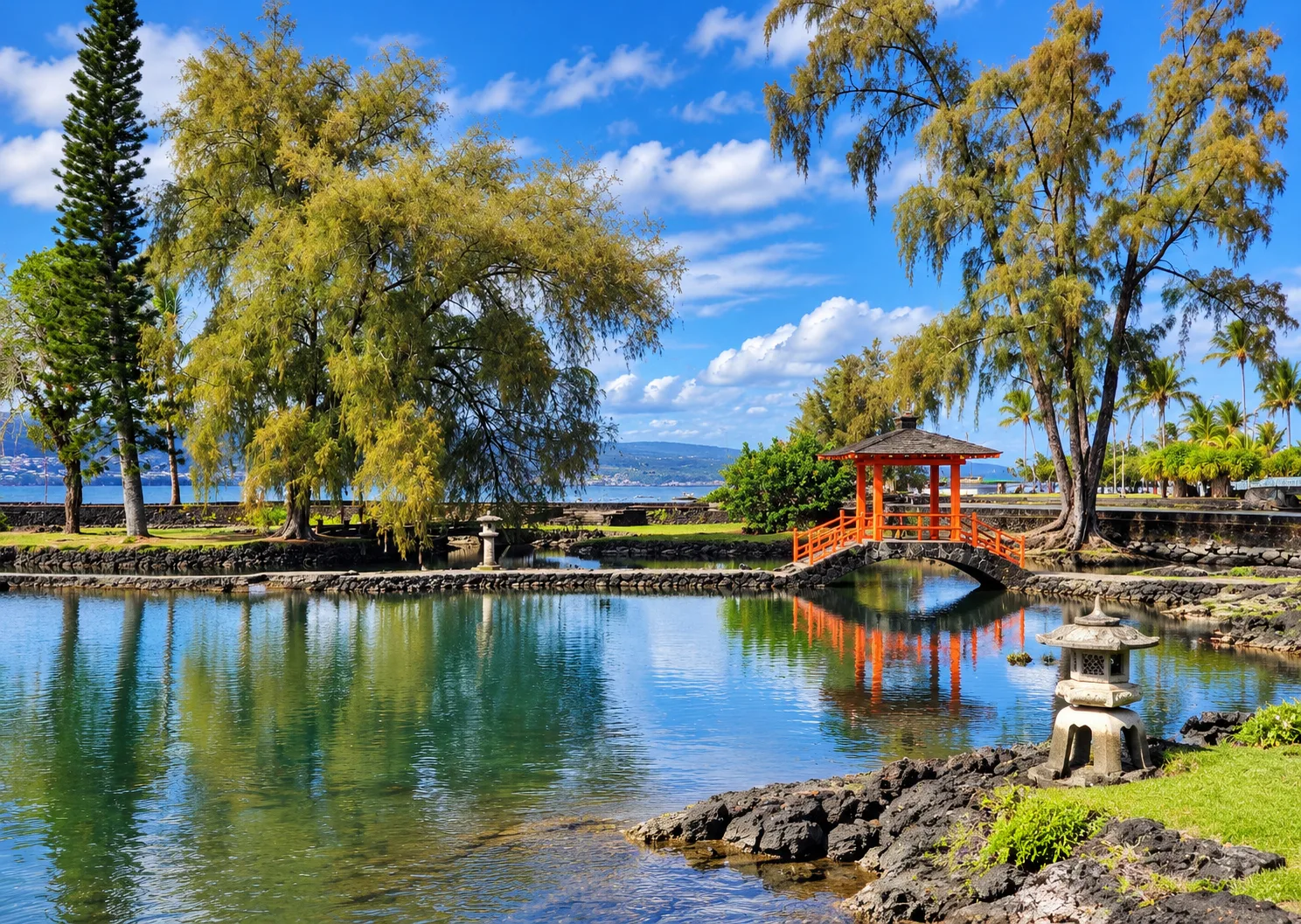
One of Hilo’s loveliest places is Liliʻuokalani Gardens, a Japanese-style garden along the bay with ornamental bridges, ponds, stone lanterns, and carefully composed views.
The gardens honor Hawaiʻi’s Japanese immigrant community and are named for Queen Liliʻuokalani. They are a wonderful place for an unhurried walk, photography, or simply sitting beside the water.
Nearby Banyan Drive has another unusual distinction: many of its enormous banyan trees were planted by prominent visitors beginning in 1933, when director Cecil B. DeMille planted the first.
Sometimes called Hilo’s Walk of Fame, the trees are associated with figures including Amelia Earhart, Babe Ruth, and filmmaker Cecil B. DeMille. Historical plaques identify the people connected with individual plantings. Over the decades, the trees have grown into extraordinary living landmarks.
Just offshore is Moku Ola (Coconut Island), a small island park traditionally associated with healing and refuge. For generations, it has been a favorite gathering place for picnics, fishing, and enjoying views across the bay.
Coconut Island access update — October 2026: The pedestrian bridge to Coconut Island (Moku Ola) collapsed on November 14, 2025, when a county crew drove a mini-excavator across it, and the island park has been closed since. Hawaiʻi County has chosen full reconstruction over repair; the mayor has said a temporary span could begin construction in January 2027 and restore pedestrian access as early as mid-2027, though permitting and construction are still pending. Confirm the island’s status before planning a visit.
The gardens, Banyan Drive, and Coconut Island together make this part of Hilo particularly memorable.
Beaches and Ocean Parks: A Different Kind of Coastline
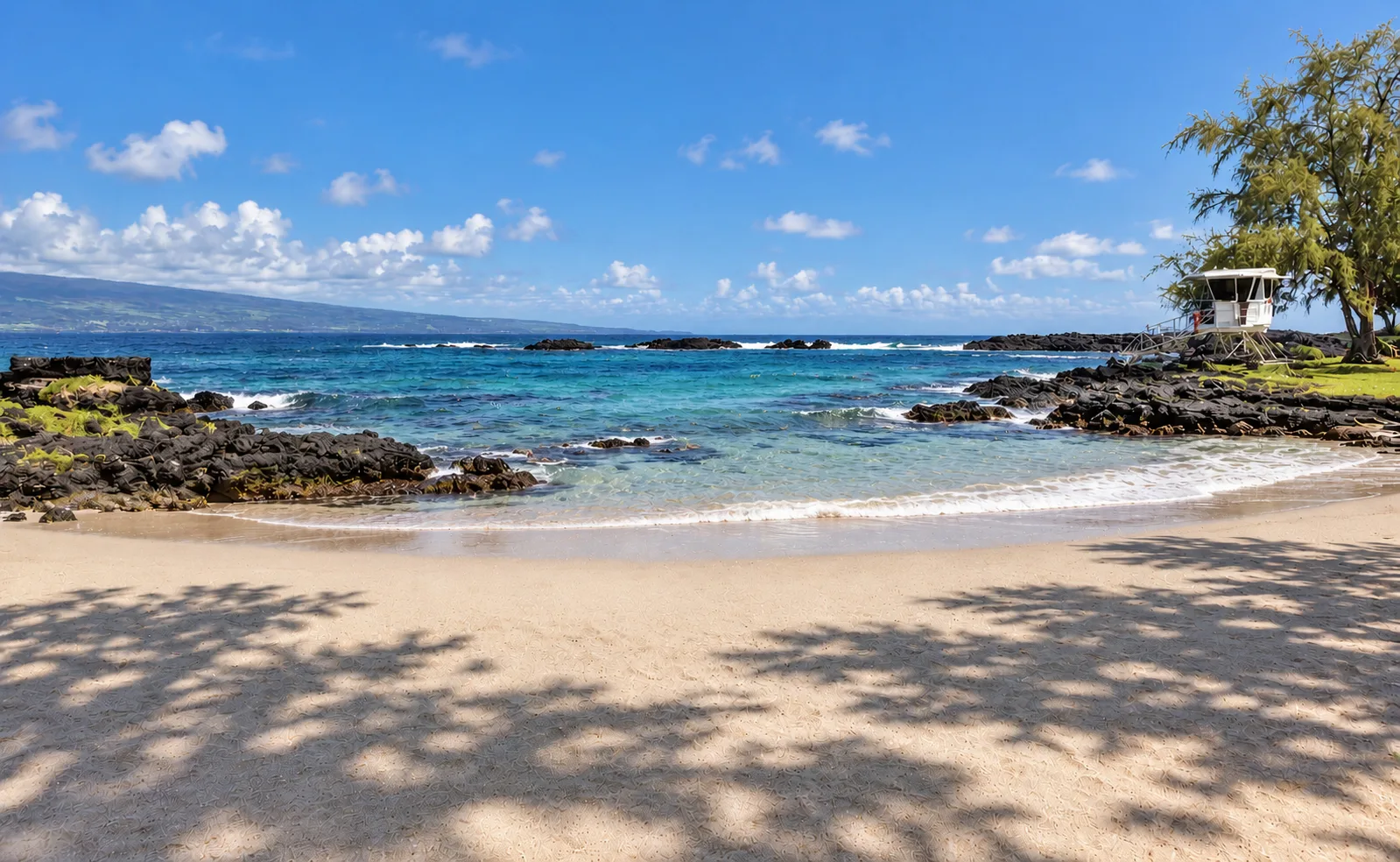
Hilo’s beaches are quite different from the broad white-sand beaches of the Kohala Coast. Much of the shoreline is volcanic rock, with protected coves, tidal pools, spring-fed lagoons, and smaller areas of sand.
Several parks are particularly well known:
- Richardson Ocean Park: A popular swimming and snorkeling area with dark volcanic sand, lava formations, and sheltered pools. Hawaiian green sea turtles are sometimes seen here.
- Carlsmith Beach Park: Known for its beautiful lagoons, grassy picnic areas, and relatively protected water. Freshwater springs can make the water surprisingly cool.
- Onekahakaha Beach Park: A shallow, sheltered swimming area particularly popular with families and young children.
- Leleiwi Beach Park: A scenic stretch of lava-rock shoreline with swimming and snorkeling opportunities when conditions permit.
- Reeds Bay Beach Park: A convenient bayfront park with relatively sheltered water and views of Hilo’s waterfront.
These are places residents return to regularly, not simply beaches for visitors.
Ocean conditions still require attention. Rocky entries, currents, changing surf, and variable water quality after heavy rain are important considerations. Check posted warnings and lifeguard information before entering the water.
Gardens, Waterfalls, and the Outdoors
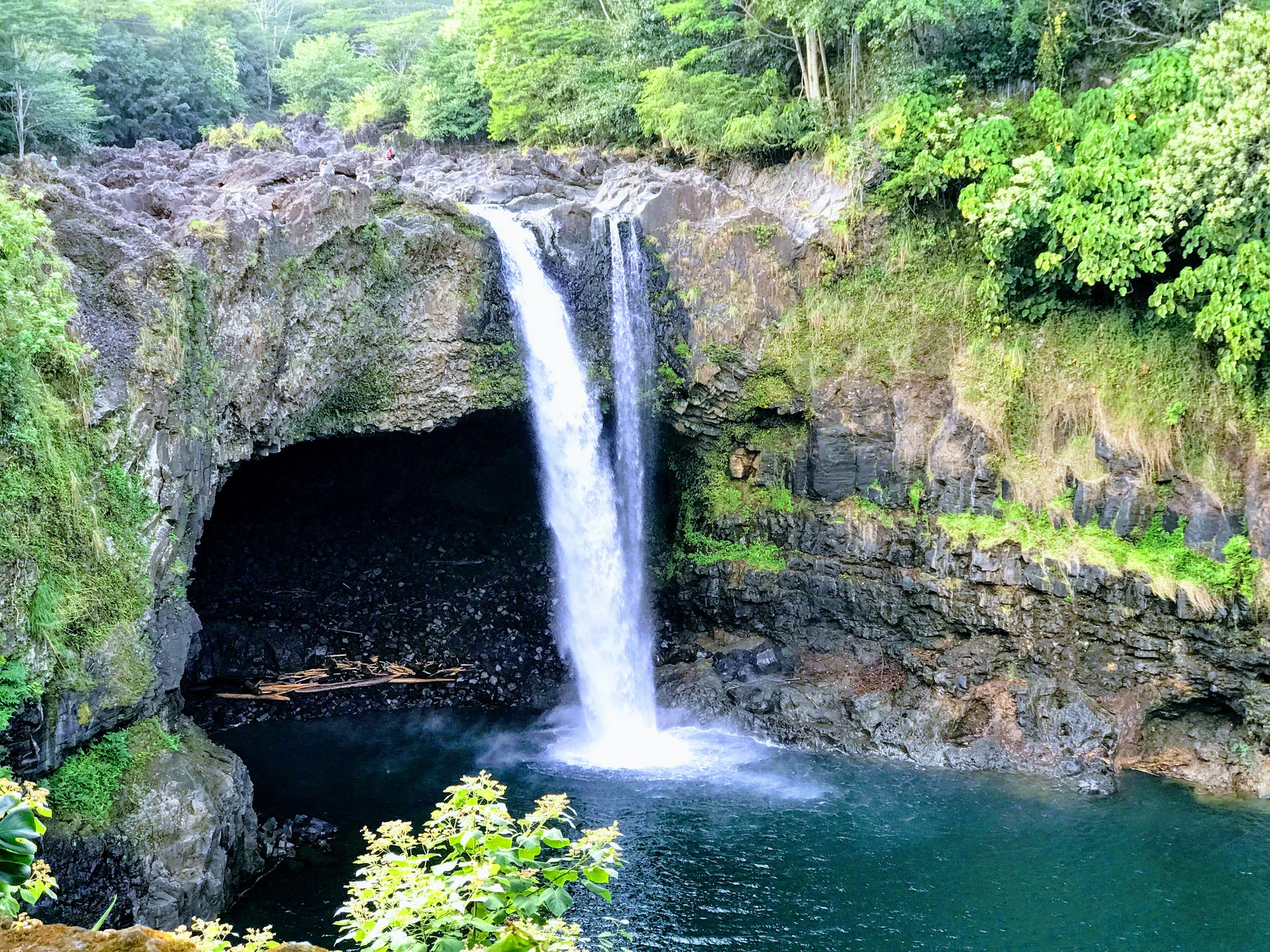
Hilo puts some of Hawaiʻi Island’s most remarkable natural places within easy reach.
Rainbow Falls, on the Wailuku River, is just a few minutes from central Hilo. The waterfall drops into a large pool surrounded by lush vegetation, and morning sunlight can produce the rainbow that gives it its name.
Farther up the river, Boiling Pots offers another perspective on the power of moving water, with cascades and pools carved into volcanic rock.
North of Hilo, the scenic drive through Onomea leads toward the Hawaiʻi Tropical Bioreserve & Garden, where winding paths descend through extraordinary tropical plant collections toward the ocean.
Continuing along the Hāmākua Coast brings you to ʻAkaka Falls State Park and its towering waterfall, surrounded by dense rainforest. Farther north, the rural windward communities of North Hilo continue along the same scenic stretch of Highway 19.
To the south, Hawaiʻi Volcanoes National Park is approximately 30 miles from Hilo, with a typical driving time of around 45 minutes to the main entrance, depending on traffic and conditions.
For anyone who loves gardening, hiking, photography, or simply living among tropical vegetation, Hilo has considerable appeal.
Culture, Education, and Everyday Life
Hilo’s identity is inseparable from Hawaiian culture.
Each spring, the Merrie Monarch Festival celebrates hula and Hawaiian cultural traditions, drawing accomplished hālau from Hawaiʻi and beyond. For many residents, it is one of the most important events of the year.
The town also supports music, performing arts, museums, cultural organizations, and community gatherings throughout the year.
Hilo is a major center for education and healthcare on the island. The University of Hawaiʻi at Hilo, Hawaiʻi Community College, and Hilo Benioff Medical Center are important local institutions, as are county and state government offices.
Hilo International Airport (ITO) provides convenient interisland connections, and nonstop mainland service returned on August 6, 2026, when Southwest began flying between Hilo and Las Vegas three days a week (Mondays, Thursdays, and Fridays) — Hilo’s first direct mainland route since early 2023. See Beat of Hawaii’s coverage of the new route .
The town offers a substantial range of grocery stores, shopping, medical services, schools, and everyday businesses. Residents do not have to rely on a distant resort or another town for most routine needs.
That practical convenience is one of Hilo’s strengths.
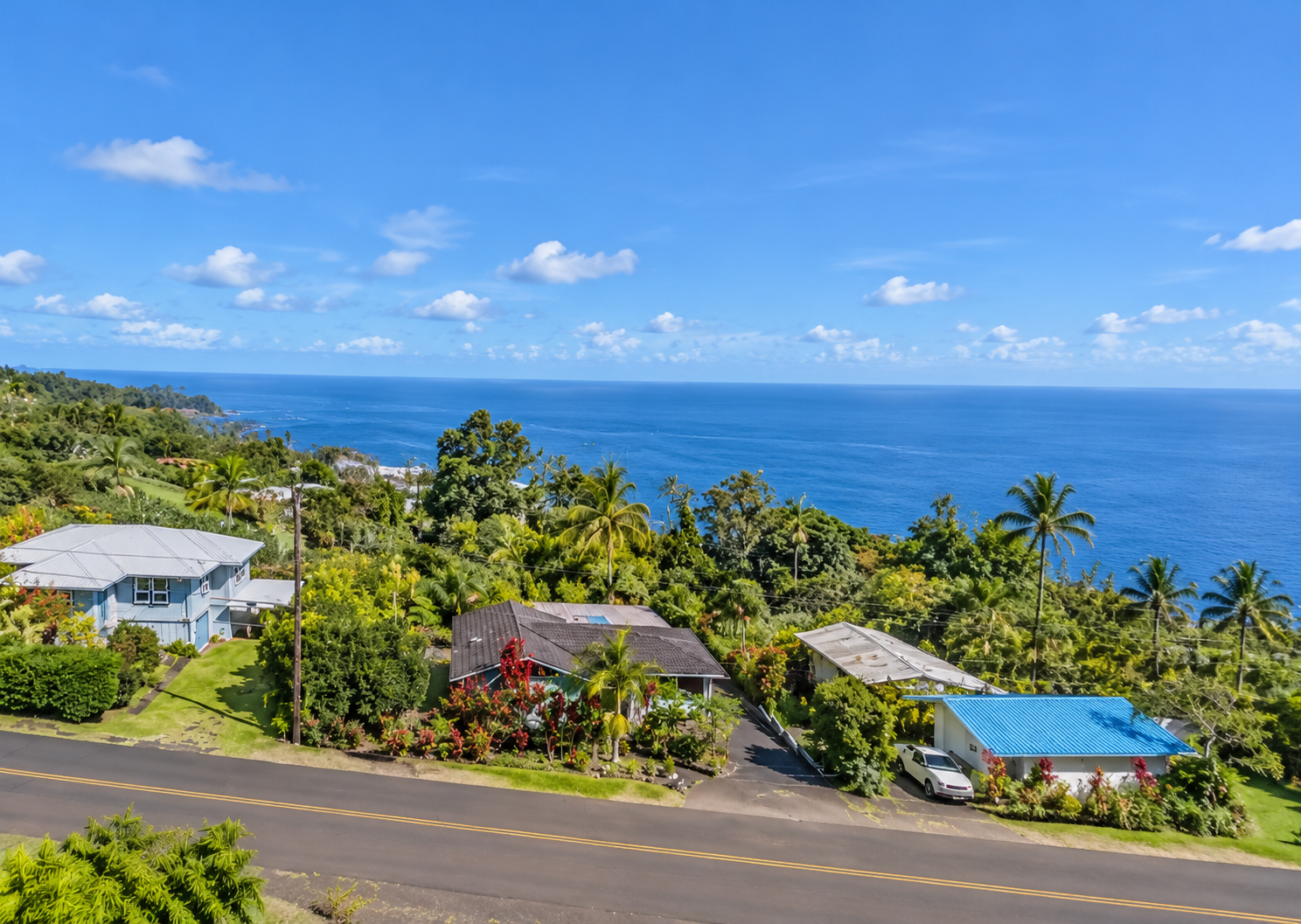
Hilo Neighborhoods and Real Estate
Hilo is not a single, uniform residential market.
Its neighborhoods vary in age, elevation, lot size, architecture, infrastructure, and exposure to rain and flooding.
Historic Homes and Neighborhoods
Hilo’s residential architecture tells much of the town’s history. Its older neighborhoods contain houses from several periods, reflecting the growth of commerce, the sugar industry, and the families and professionals who helped shape the community.
Near downtown, surviving homes from the late nineteenth and early twentieth centuries include straightforward wood-frame residences, some elevated on piers, with porches, generous windows, and practical designs suited to Hawaiʻi’s climate. The historic houses on Ululani Street offer examples of this early vernacular architecture.
One particularly interesting enclave is Halaulani Place, developed during the first half of the twentieth century. Its historic residences include Craftsman bungalows with broad roof overhangs, exposed rafters, covered porches, and, in some cases, substantial lava-rock foundations. The neighborhood also contains a Colonial Revival residence later remodeled by the celebrated Hawaiʻi architect Vladimir Ossipoff.
North of downtown, Wainaku retains connections to Hilo’s plantation history. The Hilo Sugar Company developed housing for workers and supervisors in this area, and some of those early cottages and houses survive. Elsewhere, Hilo’s residential neighborhoods expanded through the mid-twentieth century, creating a varied collection of modest family homes, larger residences, and later construction.
For buyers who appreciate older architecture, Hilo offers opportunities to find homes with distinctive character. But architectural charm should be considered alongside practical questions about original construction, alterations, drainage, ventilation, and the condition of roofs and structural components. Historic designation, where applicable, also deserves investigation before planning major changes.
Older areas close to downtown include historic homes, modest cottages, and properties within walking distance of shops and services. Some houses reflect plantation-era and mid-century building traditions, with covered lanais, generous roof overhangs, and designs intended to encourage ventilation.
Waiākea includes established residential neighborhoods, schools, and convenient access to shopping and services.
Kaumana rises into the hills above town, where properties can offer cooler temperatures, more space, and sometimes views toward the bay. Rainfall and weather conditions can change with elevation.
Along the coast, Keaukaha has a distinctive shoreline setting and deep community roots, including Hawaiian homestead lands. Buyers should understand the important differences between fee-simple property and Hawaiian Home Lands leases, which have specific eligibility and transfer requirements.
Farther inland and outside central Hilo, communities such as Waiākea Uka offer different combinations of acreage, rural character, and access to town.
The right neighborhood depends on how a buyer wants to live: walking distance to downtown, proximity to schools or healthcare, room for gardening, coastal access, or a quieter setting above the city.
If you are weighing Hilo against other districts, the Moving to Hawaiʻi Island guide compares where to live across the island.
What should buyers investigate before purchasing in Hilo?
Hilo’s climate and geography make property-specific due diligence especially important.
- Rainfall and moisture. Good roof maintenance, drainage, ventilation, and moisture management are essential. Buyers should look carefully for water intrusion, wood deterioration, termites, and mold, particularly in older homes.
- Flooding and tsunami exposure. Properties near streams, low-lying areas, and the shoreline may face flood or tsunami hazards. FEMA flood maps, county tsunami evacuation maps, and site-specific conditions should be reviewed.
- Wastewater systems. Not every property has the same wastewater infrastructure. Buyers should establish whether a home uses a sewer connection, septic system, or cesspool and understand the applicable inspection, maintenance, and conversion requirements. My journal article on wastewater systems on Hawaiʻi Island walks through what buyers should establish before an offer.
- Permits and improvements. Older homes sometimes have additions or alterations whose permit status requires investigation. Buyers should verify county records rather than assume all existing improvements were approved.
- Property access and infrastructure. Road conditions, drainage, utilities, and water supply should be evaluated individually, especially outside central Hilo.
Hilo can offer a different range of purchase opportunities from the luxury resort communities, but price comparisons need to account for condition, location, land tenure, and the cost of future maintenance. For the comparison framework I use with buyers, see where to look on Hawaiʻi Island , Part 3 of my buyer’s guide.
Is Hilo Safe From Lava?
Hilo is generally classified within Lava Hazard Zone 3 on the USGS lava-flow hazard map, reflecting its location on Mauna Loa’s northeastern slopes and historical patterns of volcanic activity.
Zone 3 is less hazardous than Zones 1 and 2, but it does not mean there is no lava risk. Past Mauna Loa flows have approached Hilo, and the potential for future eruptions remains. Lava hazard is a sharper question in Puna, just down the coast, where my journal article on buying in Puna explains the zone system in more depth.
For any particular property, buyers should review the current USGS lava-flow hazard information , the location of the property, and any relevant insurance or financing considerations.
The important distinction is that lava hazard is only one of several natural hazards to evaluate. Flooding, earthquakes, tsunami exposure, and heavy rainfall may be more immediate concerns for particular Hilo properties.
Who Does Hilo Suit?
Hilo appeals to people who appreciate a genuine working town, established communities, abundant vegetation, and access to everyday services.
It can be an excellent choice for buyers who value culture, education, gardening, outdoor recreation, and a slower pace than many mainland cities.
It may be less appealing to someone who wants consistently dry weather, broad sandy beaches, or a resort-oriented lifestyle. And although parts of Hilo are pleasantly walkable, most residential neighborhoods still require a car for many daily activities.
For investors, the presence of educational institutions, healthcare employers, government offices, and local businesses creates several potential sources of long-term rental demand. Actual rental performance, however, depends on the individual property, price, condition, location, and current market conditions.
Hilo deserves to be experienced rather than judged from a map or a weather report. Spend time downtown, visit the waterfront, explore the neighborhoods, and see how the town feels on both a sunny morning and a rainy afternoon.
If Hilo interests you as a place to live or invest, I’d be happy to help you explore its neighborhoods and evaluate available properties.
With aloha,
Carol Porter
REALTOR® · RS-87584
Better Homes and Gardens Real Estate Island Lifestyle